Shaping Future of Advanced Connectivity Technologies- Deriving Transformation via Agentic AI, AirComp and ISAC
5 May, 2026

This workshop will provide a leading forum for discussing breakthroughs in RAN architecture, agentic AI for telecoms, emerging advances in over-the-air computing for next-generation edge systems, hardware/software co-design, the integration of ISAC into RAN, field deployments, and practical proof-of-concept studies.
The workshop will feature high-quality contributions spanning both theoretical advances and real-world implementations.
The programme will also include keynote talks from industry thought leaders:
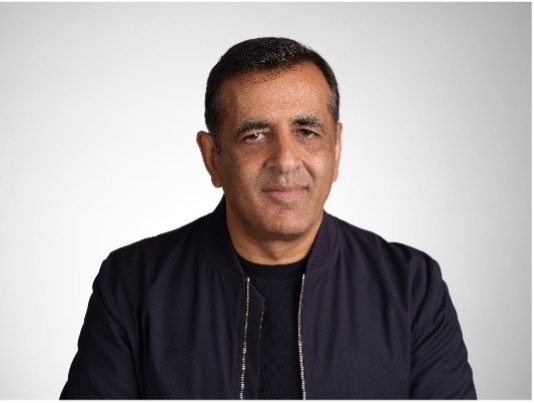
Ronnie Vasishta
Ronnie Vasishta is Senior Vice President, Telecom at NVIDIA, where he leads the company’s global telecom business. He oversees NVIDIA’s telecom strategy, product definition, development, and go-to-market activities, with a focus on next-generation virtualised networks powered by accelerated computing.
His organisation works closely with leading operators and ecosystem partners worldwide to enable new AI services, large-scale distributed AI infrastructure, and AI-native operations. A major focus of Ronnie’s work is helping telecom operators adopt AI to transform network and IT operations, customer experience, and core business processes, supporting new revenue models, greater automation, and more efficient, resilient networks.
Before joining NVIDIA in 2020, Ronnie was Vice President and General Manager of Intel’s Network and Configurable Logic Division in the Data Products Group, where he led the programmable solutions business for telecom OEMs and communication service providers.
Previously, Ronnie was President and Chief Executive Officer of eASIC Corporation, a venture-backed semiconductor company focused on telecom and storage applications, which he grew from pre-revenue through to its acquisition by Intel.
Ronnie began his career at LSI Logic, where he held a range of roles before becoming Vice President of Technical Marketing.
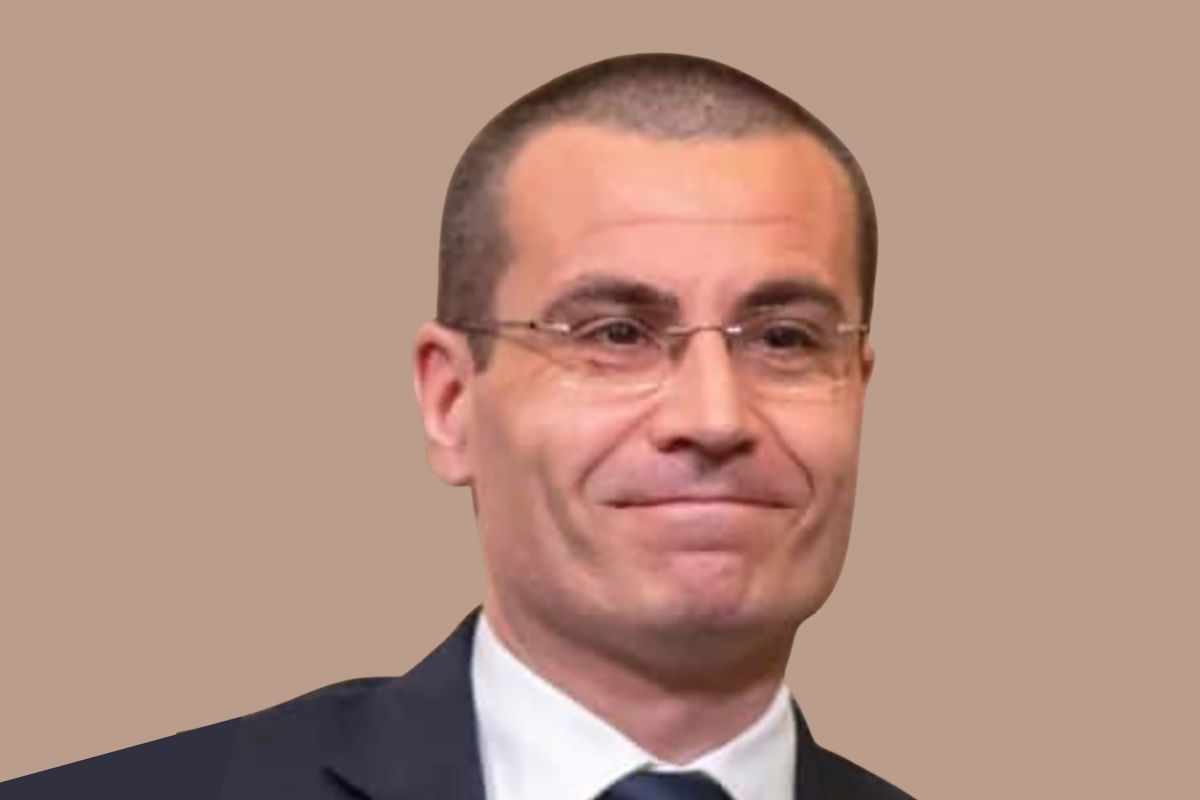
Professor Marco Di Renzo
Professor Marco Di Renzo is Professor of Telecommunications Engineering at King’s College London, based in the Centre for Telecommunications Research within the Department of Engineering. He joined King’s in January 2025, while also serving as CNRS Research Director and Head of the Intelligent Physical Communications group at the Laboratory of Signals and Systems, CNRS & CentraleSupélec, Paris-Saclay University.
He received his Laurea degree, cum laude, and PhD in electrical engineering from the University of L’Aquila, Italy, and later obtained the Habilitation à Diriger des Recherches from University Paris-Sud, now Paris-Saclay University.
Professor Di Renzo has held several prestigious international fellowships and visiting roles, including positions at the University of Oulu, Nanyang Technological University, The City University of New York, Aalto University and Queen’s University Belfast. He is a Fellow of the IEEE, IET, EURASIP and AAIA, a Highly Cited Researcher, and a member of several leading European academies.
His research has received major international recognition, including awards from the French Academy of Sciences and the IEEE Communications Society. He has also held senior editorial and leadership roles within IEEE, including serving as Editor-in-Chief of IEEE Communications Letters and Director of Journals for the IEEE Communications Society.
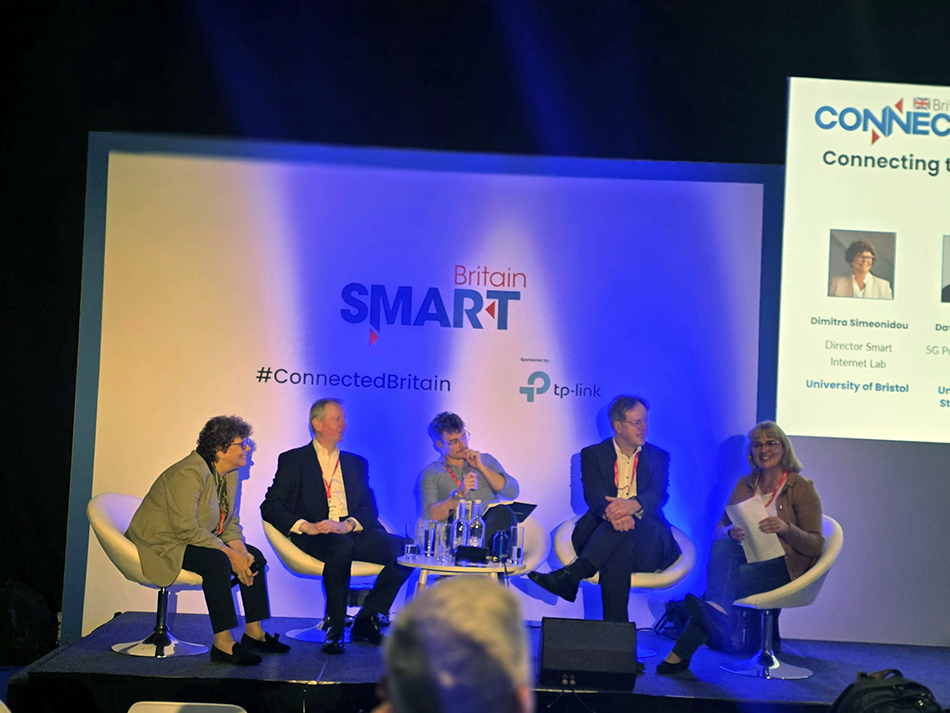
The workshop has two panels with invited panellists, including
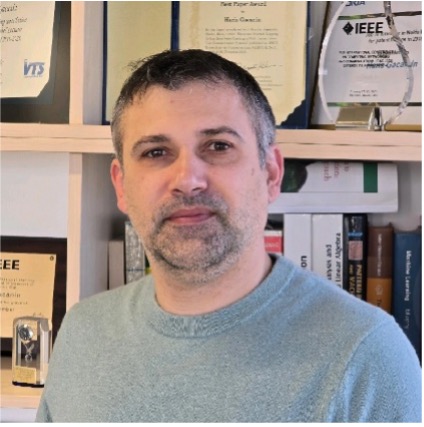
Haris Gačanin
Haris Gačanin is Professor and Head of the Chair for Distributed Signal Processing at RWTH Aachen University. His research interests span wireless signal processing and networking, with a particular focus on artificial intelligence and its applications in wireless communications.
He received his Dipl.-Ing. degree in Electrical Engineering from the University of Sarajevo in 2000, followed by an M.Sc. and PhD from Tohoku University, Japan, in 2005 and 2008 respectively. He remained at Tohoku University from 2008 to 2010, first as a Japan Society for the Promotion of Science postdoctoral fellow and later as an Assistant Professor. In 2010, he joined Alcatel-Lucent Bell, now Nokia Bell Labs, before taking up his current professorship at RWTH Aachen University in 2020.
Haris is an IEEE Fellow and has served as a Distinguished Lecturer of the IEEE Vehicular Technology Society. He has contributed to a wide range of industrial innovations, published extensively across journals, conferences and patents, and delivered numerous invited and tutorial talks.
He has received several awards for his research and innovation, including Nokia Innovation Awards, the IEICE Communications Society Best Paper Award in 2021, the IEICE Communications Society Distinguished Contributions Award in 2019, the Alcatel-Lucent Award of Excellence in 2013, and the KDDI Foundation Research Award in 2012.
He has also held editorial roles with leading publications, including IEEE Communications Magazine, IEICE Transactions on Communications and IET Communications, and has served as general chair and technical programme committee member for numerous IEEE conferences.
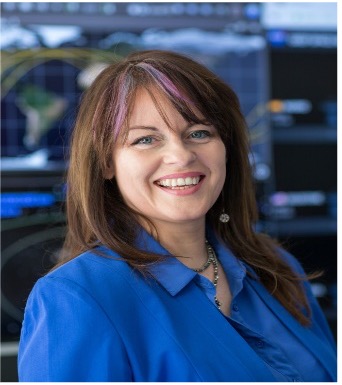
Prof. Julie McCann
Julie McCann is Professor of Computer Systems at Imperial College London. She is Co-Director of the School of Convergence Science in Space, Security and Telecoms and Director of the national CHEDDAR communications research hub.
Formerly Vice Dean Research in Imperial’s Faculty of Engineering, Julie has published extensively on decentralised and self-organising scalable algorithms and protocols for wireless/RF sensor-based systems, the Internet of Things, and cyber-physical systems. She also leads the Adaptive Emergent Systems Engineering Research Group.
Between 2015 and 2022, Julie was Deputy Director of the PETRAS IoT Cybersecurity Hub, Critical Ecosystems Lead for The Alan Turing Institute, and Imperial Principal Investigator on the EPSRC Programme Grant Science for Sensor Systems Software.
Julie has led and contributed to several major international research collaborations, including the Singapore NRF-funded Eco-Cities programme, the Intel Collaborative Research Institute for Sustainable Cities, NEC Japan collaborations on smart communications technologies, and projects funded through EU FP7 and Horizon 2020 programmes.
She is an elected Member of the Council of Professors and Heads of Computing and was elected to the membership committee of the UK Computing Research Committee. Julie holds the 2018 UKRI Suffrage Science Award for Computing and Mathematics, the President’s Medal for Research Excellence 2020, and is a Fellow of the BCS and a Chartered Engineer.
Dr Ljupco Jorguseski
Stephen Wang

Dr Sumei Sun
Dr Sumei Sun is the Executive Director of the Institute for Infocomm Research, I2R, A*STAR, Singapore. She also holds a joint appointment with the Singapore Institute of Technology and an adjunct appointment with the National University of Singapore, both as a full professor.
Her current research interests include next-generation wireless communications, cognitive communications and networks, industrial internet of things, communications-computing-control integrative design, joint radar-communication systems, and signal intelligence.
Sumei has a strong passion for industry-relevant research and technology creation. She has authored and co-authored 300 technical papers and received three best paper awards. She is the inventor or co-inventor of over thirty patented technologies, most of which have been licensed to industry.
She served as Wireless Systems Work Group Chair of IMDA’s Telecommunications Standard Advisory Committee from 2015 to 2018 and has been a member of the committee since 2018. During 2017–2018, she served on the Advisory Panel for preparing the Singapore Smart Industry Readiness Index white paper, championed by the Economic Development Board.
In 2018, Sumei served as Chairperson of the Services and Digital Economy Technology Roadmap Work Group 1, focused on Future Communications and IoT, and was a member of the Services and Digital Economy Technology Roadmap Technical Committee. This roadmap development was championed by IMDA, in partnership with NRF and A*STAR.
Since 2021, she has chaired the Special 5G Strategy Task Force under IMDA’s Telecommunications Standards Advisory Committee.
Sumei has been an active volunteer in IEEE. She is the inaugural Editor-in-Chief of IEEE Open Journal of Vehicular Technology, a member of the IEEE Transactions on Wireless Communications Steering Committee, and was a Distinguished Speaker of the IEEE Vehicular Technology Society from 2018 to 2024.
She is also the Director of the IEEE Communications Society Asia Pacific Board and an elected member-at-large with the IEEE Communications Society.

Dr Yue Wang
Dr Yue Wang is Chief Technologist at China Telecom, where she leads strategic research on next-generation ICT, with a focus on AI-native mobile networks and network-cloud convergence for AI. Her work spans foundational innovation through to pilot deployments.
Previously, Dr Wang held senior technology and leadership roles across the US and UK. At Samsung Research UK, she served as Head of 6G Research and later as Head of the Advanced Network Research Lab. In these roles, she built and led Samsung Research UK’s 6G research programme, defining the long-term technology vision and driving strategic innovation initiatives for next-generation mobile networks.
Dr Wang is internationally recognised for her pioneering contributions to AI-native telecommunications. She serves on the Board of Directors of the O-RAN Alliance, is a judge for the TM Forum Catalyst projects and Excellence Awards, and is the former Chair of the UKTIN AI Expert Working Group.
She has led pan-European research initiatives, contributed extensively to global standards development organisations, and served as Secretary and Rapporteur of ETSI ENI, where she received an ETSI award for her extraordinary contributions to the ISG.
Dr Wang is a frequent speaker at major international telecommunications conferences, including MWC.
Cicek Cavdar
Cicek Cavdar is a researcher at the School of Information and Communication Technology at the Royal Institute of Technology, KTH, in Sweden.
She completed her PhD studies in Computer Science at the University of California, Davis in 2008 and at Istanbul Technical University, Turkey, in 2009. After completing her PhD, she worked as an Assistant Professor in the Computer Engineering Department at Istanbul Technical University.
Cicek has chaired several workshops on green mobile broadband technologies and Green 5G Mobile Networks, co-located with IEEE ICC and Globecom. She also served as Chair of the Green Communications Track at IEEE ICC 2017 in Paris.
At the Wireless@KTH research centre, she has led EU EIT Digital projects including 5GrEEn: Towards Green 5G Mobile Networks and Seamless DA2GC in Europe. She is also serving as the leader of the Swedish cluster for the EU Celtic Plus project SooGREEN: Service Oriented Optimisation of Green Mobile Networks.
Her research interests include the design and analysis of telecommunication networks, with a focus on 5G mobile networks, cloud computing, big data in the network, survivability, energy efficiency, end-to-end converged wireless optical networks, and 5G network architectures.
The workshop will present four invited papers from CHEDDAR hub partners:
Workshop Chair:
Weisi Guo, Cranfield University, UK
Qammar Abbassi, University of Glasgow, UK
Workshop TPC Chairs:
Harris Pervaiz, University of Essex, UK
Nauman Aslam, Northumbria University, UK
Steering Committee:
Julie McCann, Imperial College, UK
Muhammad Ali Imran, Glasgow University, UK
Syed A. R. Zaidi, University of Leeds, UK
Poonam Yadav, University of York, UK
Hongjian Sun, University of Durham, UK
Workshop Programme:
| Time | Session | Speaker(s) / Contributor(s) | Affiliation |
|---|---|---|---|
| 08:30–08:45 | Paper 1: A Synthetic Dataset for Anomaly Detection of RIS-Enabled Jamming Attacks | Hui S. Chong, Prabhat R. Gautam, Yathreb Bouazizi, Michael Breza and Julie McCann | Imperial College London, UK |
| 08:50–09:05 | Paper 2: ENDURE: An Efficient and Lightweight Group Key Generation Scheme Using Sensor Randomness | Michael J. Breza; Aisha K. Junejo; Fatma Benkhelifa; Julie McCann | Imperial College London; Keele University; Queen Mary University of London; Imperial College London, UK |
| 09:10–09:25 | Paper 3: Design Insights into Partition Placement and Routing for DNN Inference | Jinkun Zhang and Poonam Yadav | University of York, UK |
| 09:30–09:45 | Paper 4: Intent Driven Agentic AI for Safe Energy Efficient | Yejing Fan, Abdelaziz Salama, Mohammed M. H. Qazzaz, Maryam Hafeez, Syed Ali Raza Zaidi, Ahmed Murad, Mahdi Sharara, Yejing Fan
|
University of Leeds, UK; VIAVI Solutions, UK; VIAVI Solutions, USA |
| 09:45–10:30 | Keynote 1: AI-Driven Digital Twins for 6G: From Measurement-Grounded Models to GPU-Native Network Automation | Ronnie Vasishta | NVIDIA |
| 11:00–11:30 | Panel 1: Fostering International and Industrial Collaborations | Prof. Haris Gacanin; Prof. Sumei Sun; Dr Ljupco Jorguseski; Prof. Julie McCann; Dr Steven Wang | 6GEM, RWTH, Germany; A*STAR, Singapore; TNO, Netherlands; Imperial College London / CHEDDAR, Hub, UK; VIAVI, UK |
| Moderator | Dr S. A. Zaidi | University of Leeds, UK | |
| 11:30–12:00 | Keynote 2: Over-the-Air Computation Enabling Integrated Communication, Sensing and Computation for 6G | Professor Marco Di Renzo | King’s College London |
| 12:00–12:30 | Panel 2 | Dr Yue Wang; Prof. Cicek Cavdar | China Telecom; KTH |
| Moderator | Maryam Hafeez | University of Leeds, UK |