CHEDDAR Hub Research Campaigns
Explore CHEDDAR’s latest campaigns, bringing together stories, research and perspectives from across our community.
From showcasing pioneering research and real-world impact to highlighting the people shaping the future of connectivity, our campaigns explore the ideas, challenges and opportunities driving next-generation communications.
Discover our latest series, meet the researchers behind the work and find out how CHEDDAR is helping to shape a more connected, sustainable, secure and inclusive future.

This campaign explores how CHEDDAR researchers are turning pioneering communications research into practical solutions for society. Through accessible stories, we highlight the challenges being addressed, the technologies being developed and their potential impact across healthcare, sustainability, security and future connected systems.
What happens when careers cross the boundary between industry and academia? In this new CHEDDAR blog series, we explore real career journeys from researchers and innovators who’ve worked on both sides sharing honest reflections on skills, culture, impact, and what each world can learn from the other. Kicking off the series is Dr Muhammad Heggo - Designing Tomorrow’s Wireless Systems Through Today’s Research

Researchers from Cranfield University showcased pioneering 6G and AI research at the IEEE VTC 2025-Fall in Chengdu, China. Their presentations covered breakthroughs in edge AI orchestration, federated learning, and data-driven network stability, alongside a tutorial on trustworthy communications for connected intelligence systems. The event strengthened global collaboration and highlighted CHEDDAR’s leadership in shaping next-generation wireless technologies.
King’s College London, led by Professor Marco Di Renzo, is pioneering research into Integrated Communication, Sensing and Computing (ICSC) — a core capability of future 6G networks that will merge the physical, biological, and digital worlds. Their work moves beyond traditional digital processing to explore wave-domain processing, which reduces dependence on analogue-to-digital converters and RF chains. This shift promises to cut power use and complexity in 6G transceivers. Central to the research is the development of wave-domain multilayer electromagnetic neural networks, enabling energy-efficient, over-the-air intelligence and paving the way for more sustainable, high-performance communication systems.
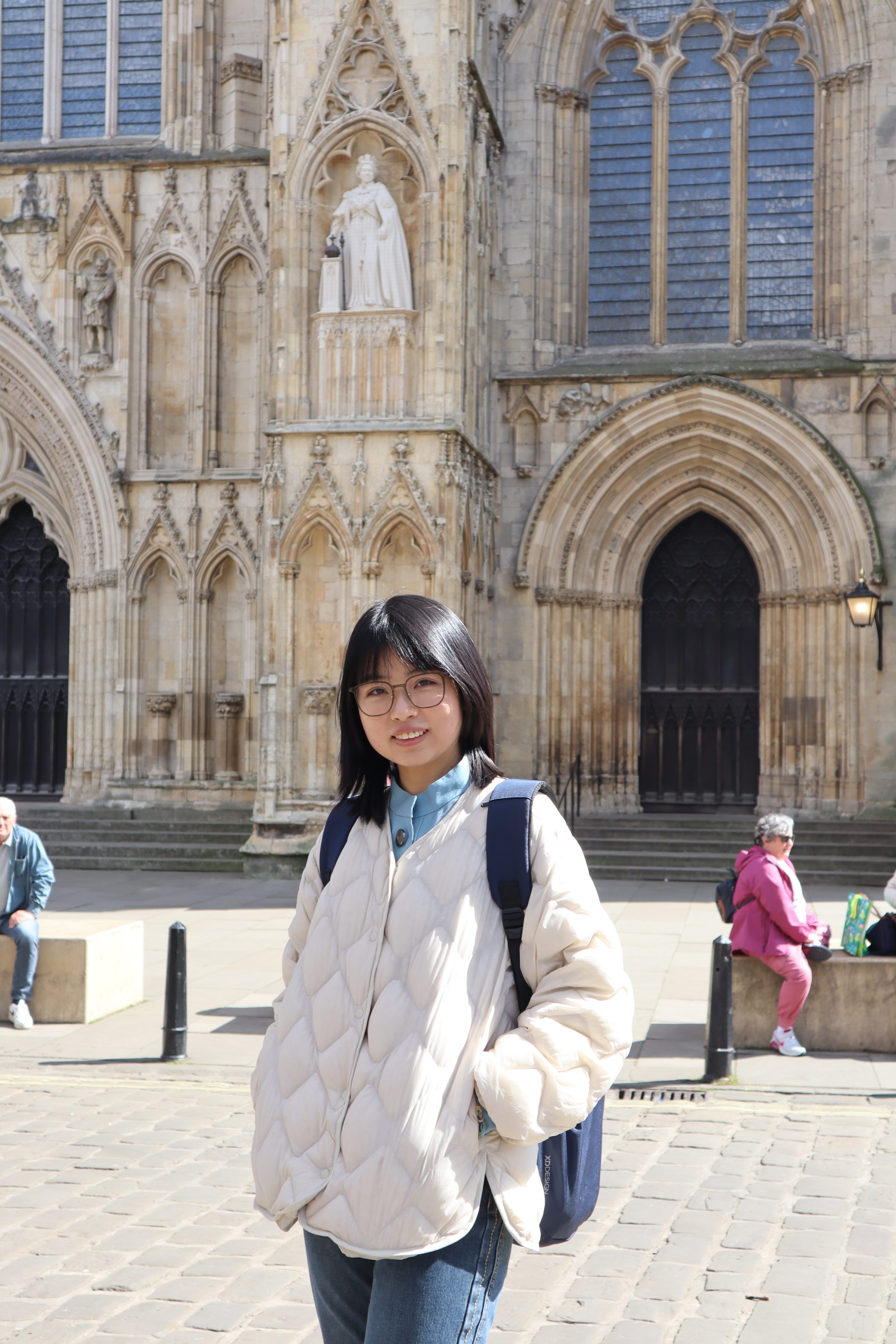
Dr Huijun Tang is a Postdoctoral Research Associate in Electrical Power Node. She has contributed as a Technical Program Committee member for major conferences including IEEE INFOCOM FutureTelecoms 2025, ICCCN 2025, ICA3PP 2025, TrustCom 2025, and SmartData 2023–2024. She also serves as a reviewer for leading journals such as IEEE TMC, TITS, TVT, and TCE.