Friends of CHEDDAR/Industry 2026: Research Posters
4 Jun, 2026

Researchers from across the CHEDDAR community presented a diverse collection of posters during CHEDDAR Week 2026, showcasing emerging research across sustainable networks, artificial intelligence, integrated sensing and communications, non-terrestrial networks, wireless security and intelligent infrastructure.
The posters highlight new approaches to some of the key challenges facing future communications systems, from reducing the environmental impact of network operations to making autonomous AI systems more transparent, resilient and trustworthy.
Explore the research below and download each poster to learn more about the methods, findings and potential real-world applications.
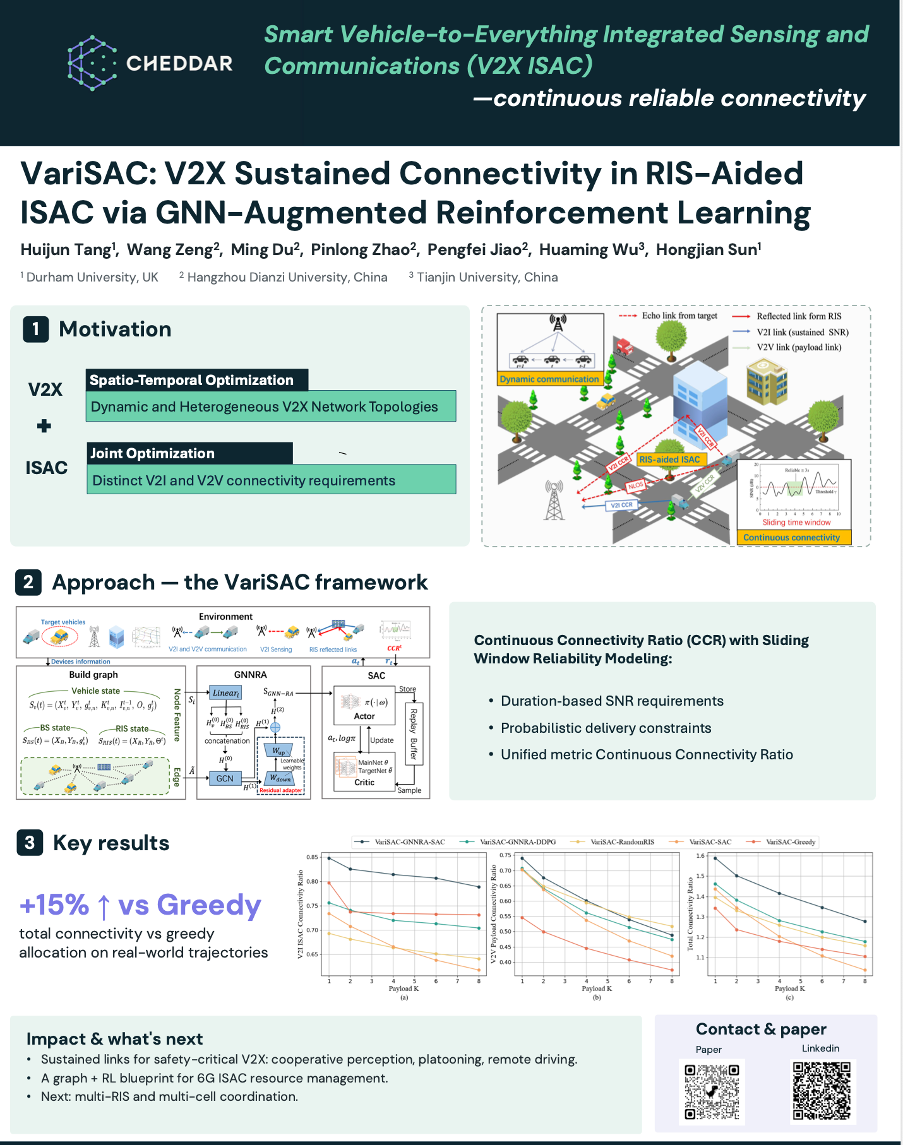
VariSAC: V2X Sustained Connectivity in RIS-Aided ISAC via GNN-Augmented Reinforcement Learning
Huijun Tang, Wang Zeng, Ming Du, Pinlong Zhao, Pengfei Jiao, Huaming Wu and Hongjian Sun
Durham University, Hangzhou Dianzi University and Tianjin University
VariSAC addresses the challenge of maintaining continuous and reliable connections between vehicles, roadside infrastructure and other road users.
The framework combines graph neural networks, reinforcement learning and reconfigurable intelligent surfaces to optimise integrated sensing and communications resources as vehicle positions and network conditions change. Testing using real-world trajectories delivered a 15% improvement in total connectivity compared with a greedy allocation approach.
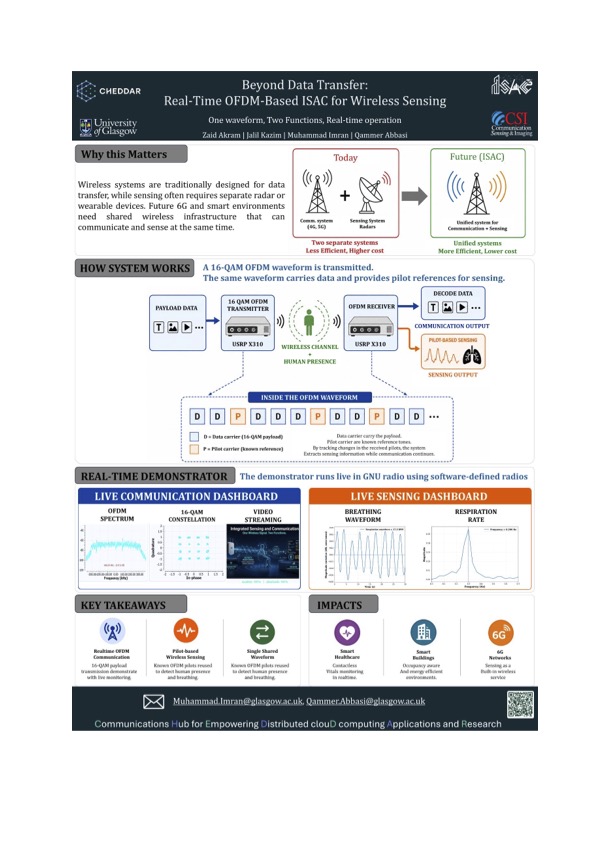
Beyond Data Transfer: Real-Time OFDM-Based ISAC for Wireless Sensing
Authors: Zaid Akram, Jalil Kazim, Muhammad Ali Imran, Qammer Abbasi
Institution: James Watt School of Engineering, University of Glasgow
This research presents a real-time, OFDM-based Integrated Sensing and Communication (ISAC) system that uses a single wireless waveform for both data transmission and human sensing.
A 16-QAM OFDM signal carries communication data, while its known pilot carriers are reused to detect human presence and monitor respiration. This is achieved without interrupting the communication link or requiring a separate radar system or wearable device.
The system is implemented using GNU Radio and software-defined radios. Live communication outputs include spectrum and constellation displays and video transmission, alongside real-time breathing-waveform monitoring and respiration-rate estimation.
The key message is that existing wireless signals can provide sensing capabilities in addition to connectivity. This shared-waveform approach could reduce hardware requirements, cost and complexity while enabling future applications in contactless healthcare, occupancy-aware smart buildings and sensing-enabled 6G networks.
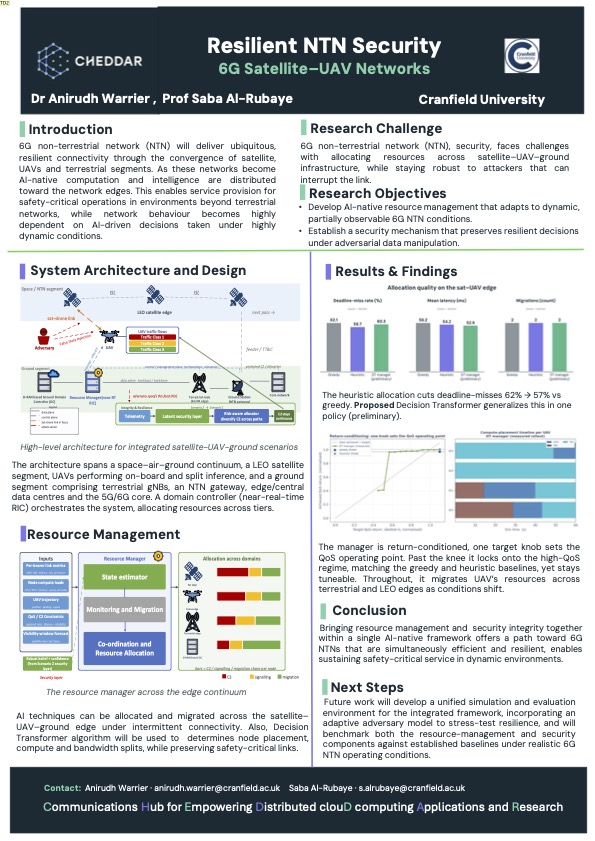
Resilient NTN Security: 6G Satellite–UAV Networks
Dr Anirudh Warrier and Professor Saba Al-Rubaye
Cranfield University
This research investigates how future 6G non-terrestrial networks can remain efficient and secure while operating across satellites, uncrewed aerial vehicles and terrestrial infrastructure.
The proposed architecture brings AI-native resource management together with a security layer designed to maintain reliable decisions under adversarial data manipulation. Preliminary results show that the allocation approach reduced deadline misses from approximately 62% to 57% compared with a greedy baseline.
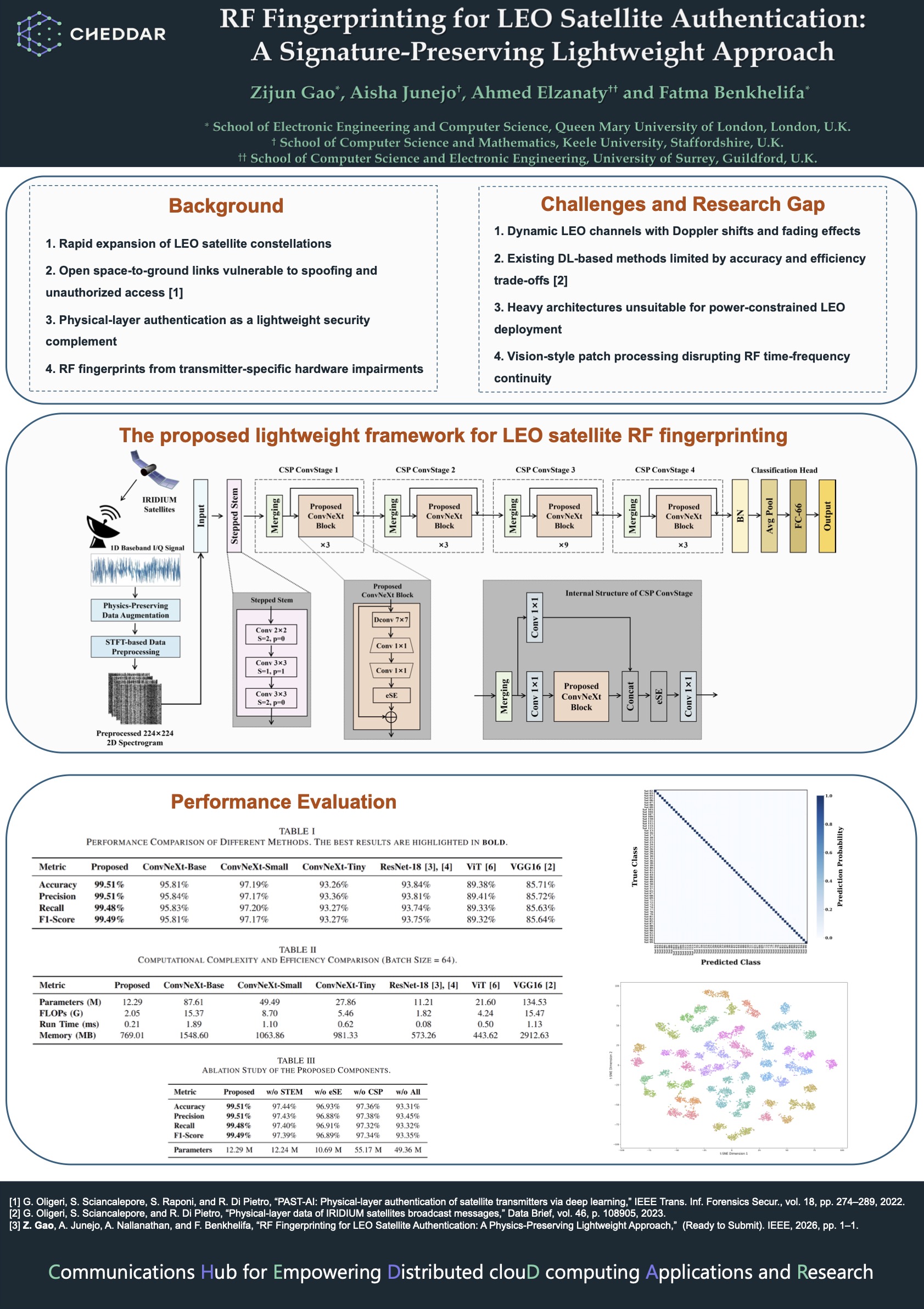
RF Fingerprinting for LEO Satellite Authentication: A Physics-Preserving Lightweight Approach
Zijun Gao and Fatma Benkhelifa, Aisha Junejo, Ahmed Elzanaty
Radio frequency (RF) fingerprinting is critical for securing low Earth orbit (LEO) networks, yet existing deep learning methods face significant deployment constraints. Conventional architectures suffer from representational and performance bottlenecks, while modern vision models may disrupt RF signal continuity and introduce excessive computational overhead. We propose alightweight architecture with asignature-preserving preprocessing pipeline that reduces transient channel effects while retaining intrinsic transmitter hardware impairments.
Temporal-shift data augmentation and short-time Fourier transform mapping expose fine-grained hardware features while preserving phase continuity. The architecture combines a cross-stage partial structure with an effective squeeze-and-excitation module to reduce computation and emphasize impairment-related features.
Evaluated on a real-world IRIDIUM dataset, the proposed method achieves 99.51% accuracy using only 12.29 M parameters and 2.05 GFLOPs, providing an efficient authenticationsolution for resource-constrained satellite ground receivers.
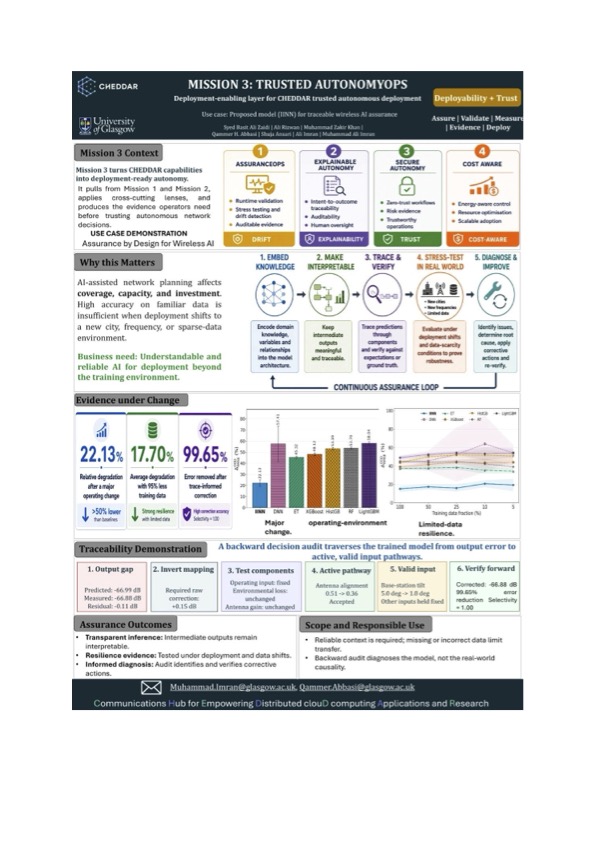
Mission 3: Trusted AutonomyOps
Deployment-enabling layer for CHEDDAR trusted autonomous deployment
Syed Basit Ali Zaidi, Ali Rizwan, Muhammad Zakir Khan, Qammer H. Abbasi, Shuja Ansari, Ali Imran and Muhammad Ali Imran
University of Glasgow
This poster presents Innately Intelligent Neural Networks (IINNs) as a use case within CHEDDAR’s Mission 3: Trusted AutonomyOps.
IINNs embed wireless-propagation knowledge directly into the neural-network architecture, creating physically meaningful and structurally traceable prediction pathways rather than relying solely on post-hoc explanations.
The model was evaluated under changes in city and carrier frequency, as well as with progressively reduced training data. Under a combined city–frequency shift, IINN recorded 22.13% relative out-of-distribution degradation, compared with 45.32–58.04% for the benchmark models. Across training-data fractions ranging from 100% to 5%, it achieved the lowest average degradation at 17.70%.
In an illustrative backward audit, a prediction error was traced through the model’s active pathway. A physically valid and operator-controllable antenna-tilt adjustment then reduced the model error by 99.65%.
The key message is that reliable wireless AI requires traceability, robustness and physical interpretability, as well as predictive accuracy.
Multi-Human Tracking and Activity Recognition Using mmWave Radar
Zichao Shen, Atar Babgei and Julie McCann
Imperial College London
This project explores how millimetre-wave radar can be used to track multiple people and recognise activities without relying solely on cameras.
The system uses range–azimuth and range–Doppler radar maps to preserve detailed spatial and movement information, including when people cross paths or interact closely. The research could support privacy-aware assisted living, safety monitoring and intelligent indoor environments.
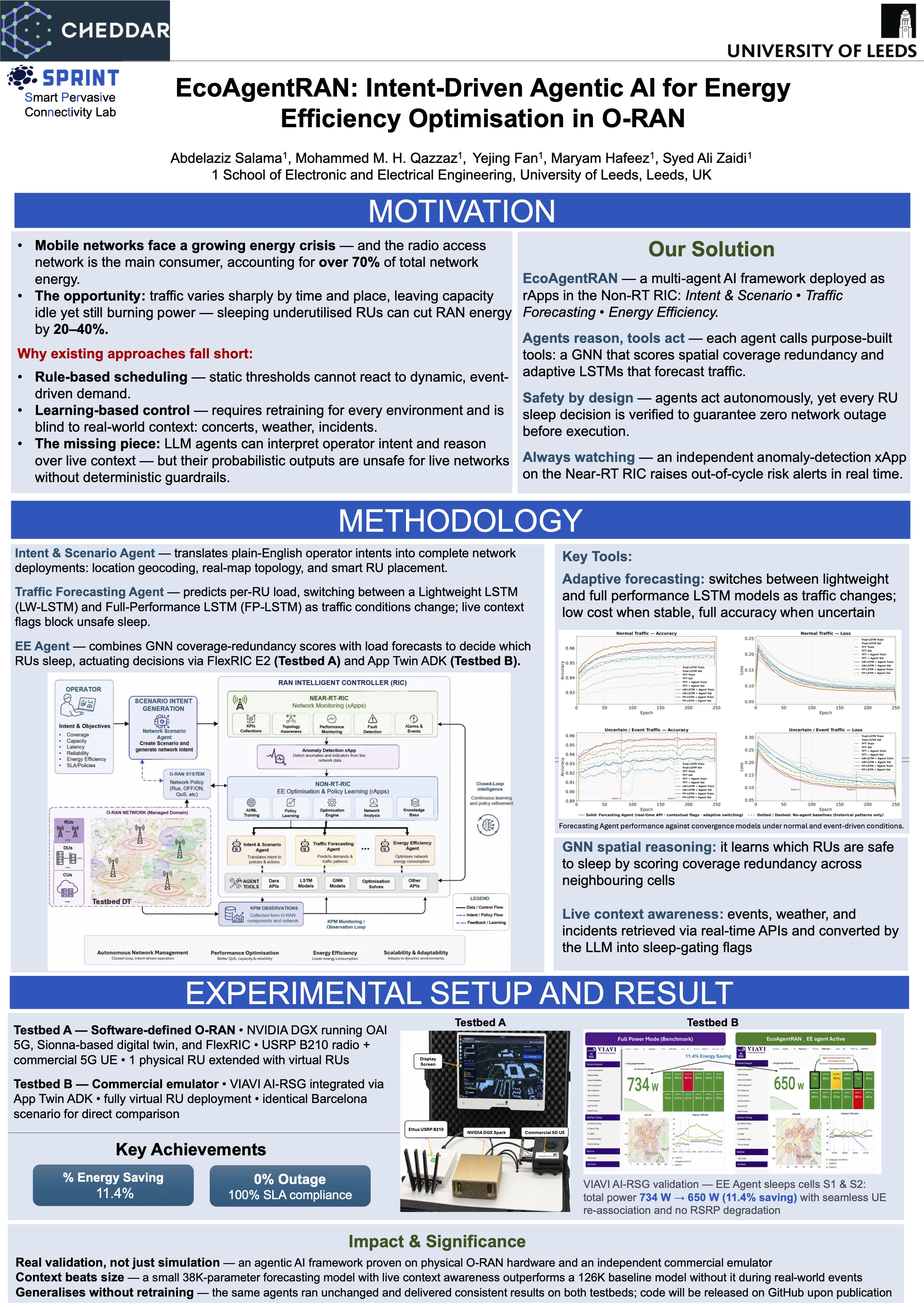
EcoAgentRAN: Intent-Driven Agentic AI for Energy Efficiency Optimisation in O-RAN
Abdelaziz Salama, Mohammed M. H. Qazzaz, Yejing Fan, Maryam Hafeez and Syed Ali Zaidi
University of Leeds
Radio Access Networks (RANs) account for over 70% of mobile network energy consumption. EcoAgentRAN is an intent-driven, cloud-native multi-agent AI framework that autonomously optimises energy efficiency in Open RAN (O-RAN). Deployed as intelligent rApps in the Non-RT RIC, it translates operator intents into network deployments, forecasts traffic using adaptive AI models enhanced with real-time contextual information, and identifies underutilised Radio Units (RUs) for energy-saving sleep modes.
A deterministic constraint enforcement layer validates every AI decision before execution, while an independent anomaly-detection xApp continuously monitors network conditions. EcoAgentRAN was validated on both a software-defined O-RAN testbed with physical radio hardware and the VIAVI AI-RSG commercial RAN emulator, demonstrating portability without retraining.
Experimental results achieved 11–14.5% energy savings during representative daytime operation and up to 40% during off-peak periods, while maintaining zero network outages and 100% SLA compliance.
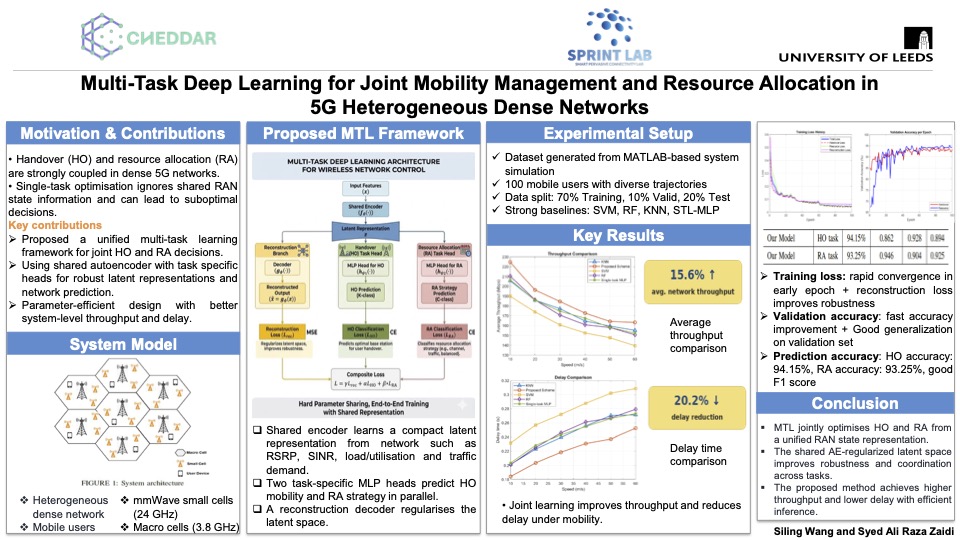
Multi-Task Deep Learning for Joint Mobility Management and Resource Allocation in 5G Heterogeneous Dense Networks
Siling Wang and Syed Ali Raza Zaidi
University of Leeds
This research examines how handover management and radio resource allocation can be coordinated using a single multi-task deep-learning framework.
Rather than treating the two network-management tasks independently, the model uses a shared representation of network conditions—including signal strength, interference, network load and traffic demand—to make handover and resource-allocation decisions in parallel.
Testing in a simulated heterogeneous network with 100 mobile users produced a handover prediction accuracy of 94.15% and a resource-allocation accuracy of 93.25%. The proposed approach also improved average throughput and reduced delay compared with separate single-task methods.
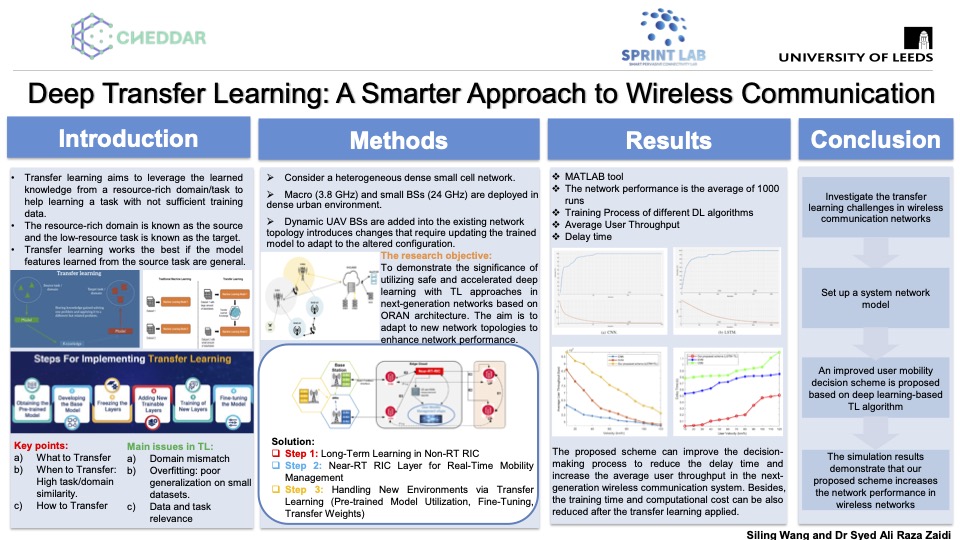
Deep Transfer Learning: A Smarter Approach to Wireless Communication
Siling Wang and Dr Syed Ali Raza Zaidi
University of Leeds
This poster explores how transfer learning can help intelligent wireless networks adapt to new environments without requiring an artificial intelligence model to be completely retrained.
The proposed approach uses knowledge learned from an existing network configuration and transfers it to a changed environment, such as one in which new unmanned aerial vehicle base stations have been introduced. The framework combines long-term learning within the Non-Real-Time RIC with real-time mobility management in the Near-Real-Time RIC.
Simulation results indicate that transfer learning can reduce training time and computational costs while improving user throughput and reducing network delay.
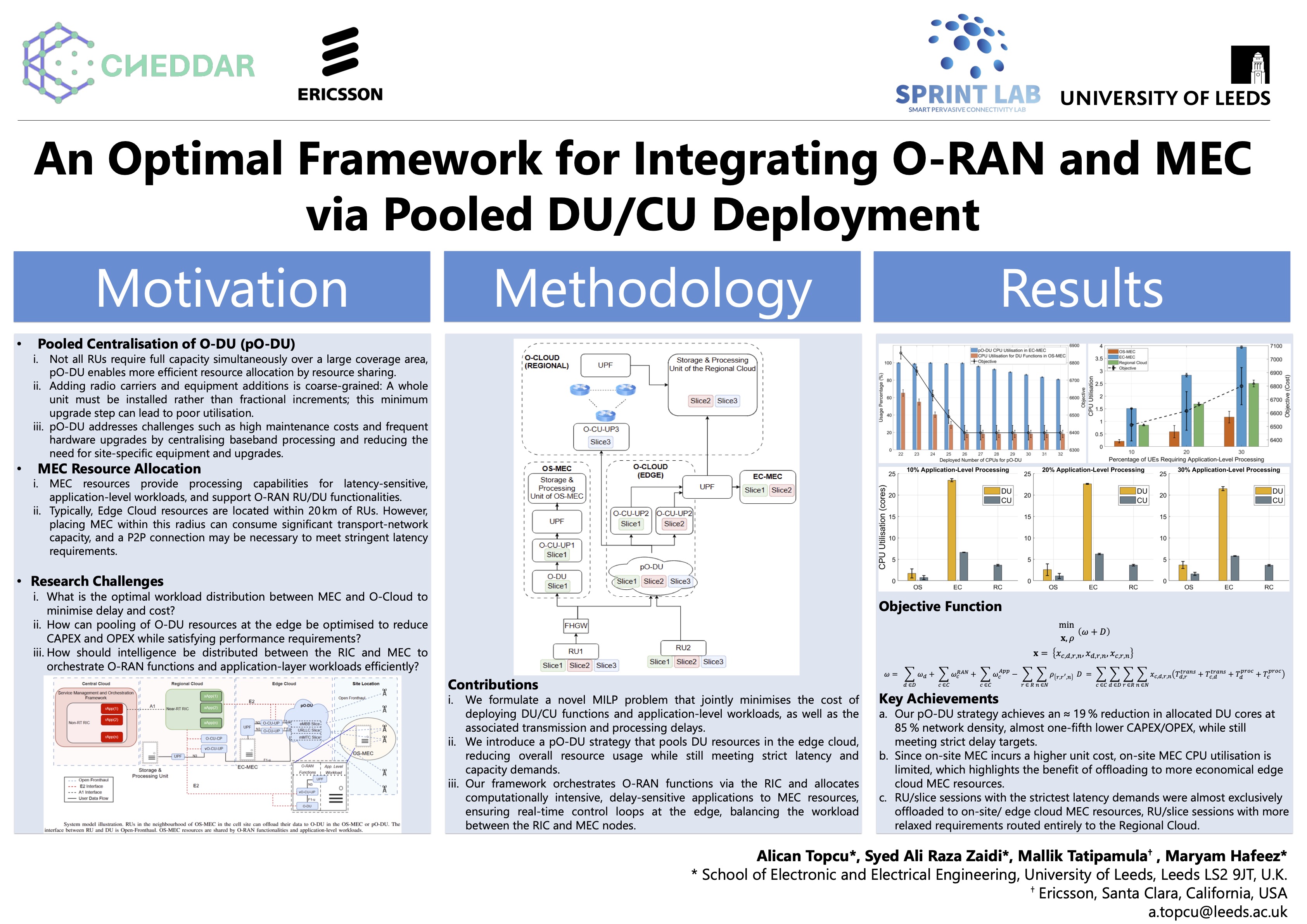
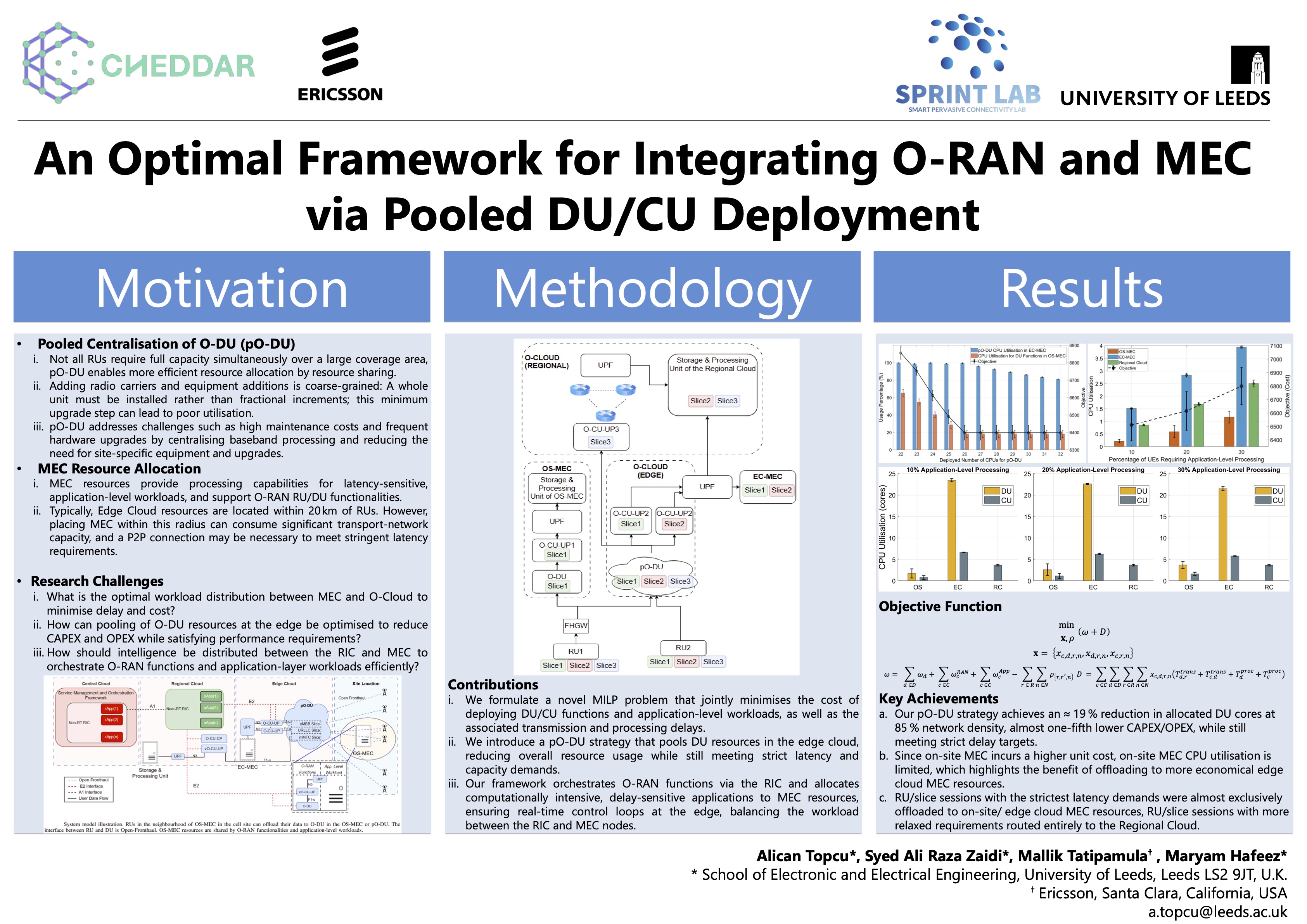
An Optimal Framework for Integrating O-RAN and MEC via Pooled DU/CU Deployment
Alican Topcu, Syed Ali Raza Zaidi, Mallik Tatipamula and Maryam Hafeez
University of Leeds and Ericsson
This poster presents an optimisation framework for integrating O-RAN with Multi-access Edge Computing (MEC) through pooled O-DU and flexible O-CU deployment. The work addresses how RAN functions and application-level workloads can be placed across on-site MEC, edge cloud MEC, and regional cloud resources while satisfying latency and capacity requirements. The key message is that pooled O-DU deployment can reduce unnecessary resource provisioning by allowing shared DU resources at the edge, rather than dimensioning each DU for worst-case demand. The framework jointly considers deployment cost, processing delay, transmission delay, and workload placement, providing operators with a practical approach to balance cost efficiency and service performance. The potential impact is more efficient, scalable, and cost-aware O-RAN/MEC deployment for future cloud-native mobile networks.
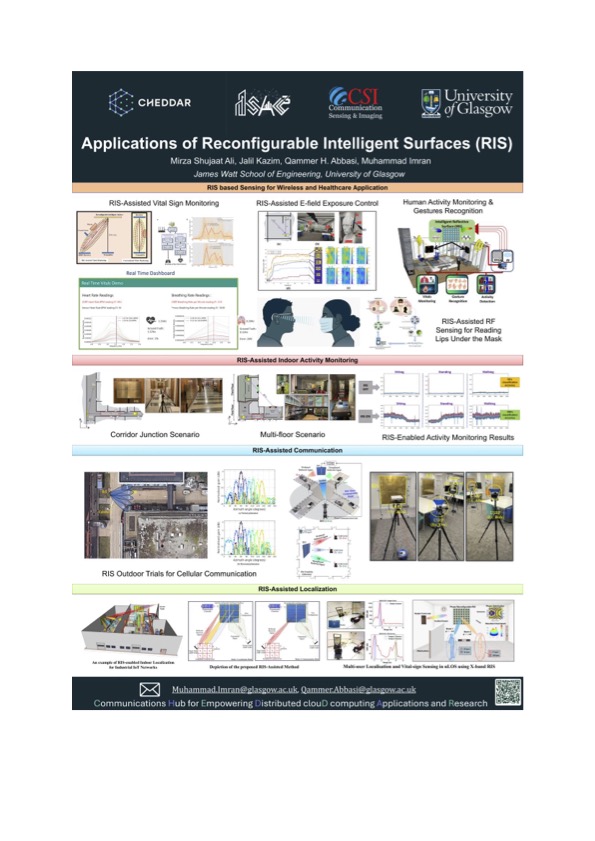
Applications of Reconfigurable Intelligent Surfaces
Mirza Shujaat Ali, Jalil Kazim, Muhammad Imran and Qammer H. Abbasi
James Watt School of Engineering, University of Glasgow
This poster presents the diverse applications of Reconfigurable Intelligent Surfaces (RIS) across wireless communications, healthcare sensing and localisation.
RIS technology enables the surrounding radio environment to be intelligently controlled, improving signal coverage while supporting functions such as contactless vital-sign monitoring, indoor activity and gesture recognition, electric-field exposure control, non-line-of-sight localisation and enhanced cellular communications.
The key message is that RIS can serve as a multifunctional platform, rather than simply a communication device, by combining connectivity, sensing and environmental control. Demonstrated applications include masked lip-reading, multi-user localisation, vital-sign sensing and outdoor cellular trials.
This research could contribute to safer healthcare monitoring, more reliable and energy-efficient wireless networks, and intelligent environments for future 6G systems.
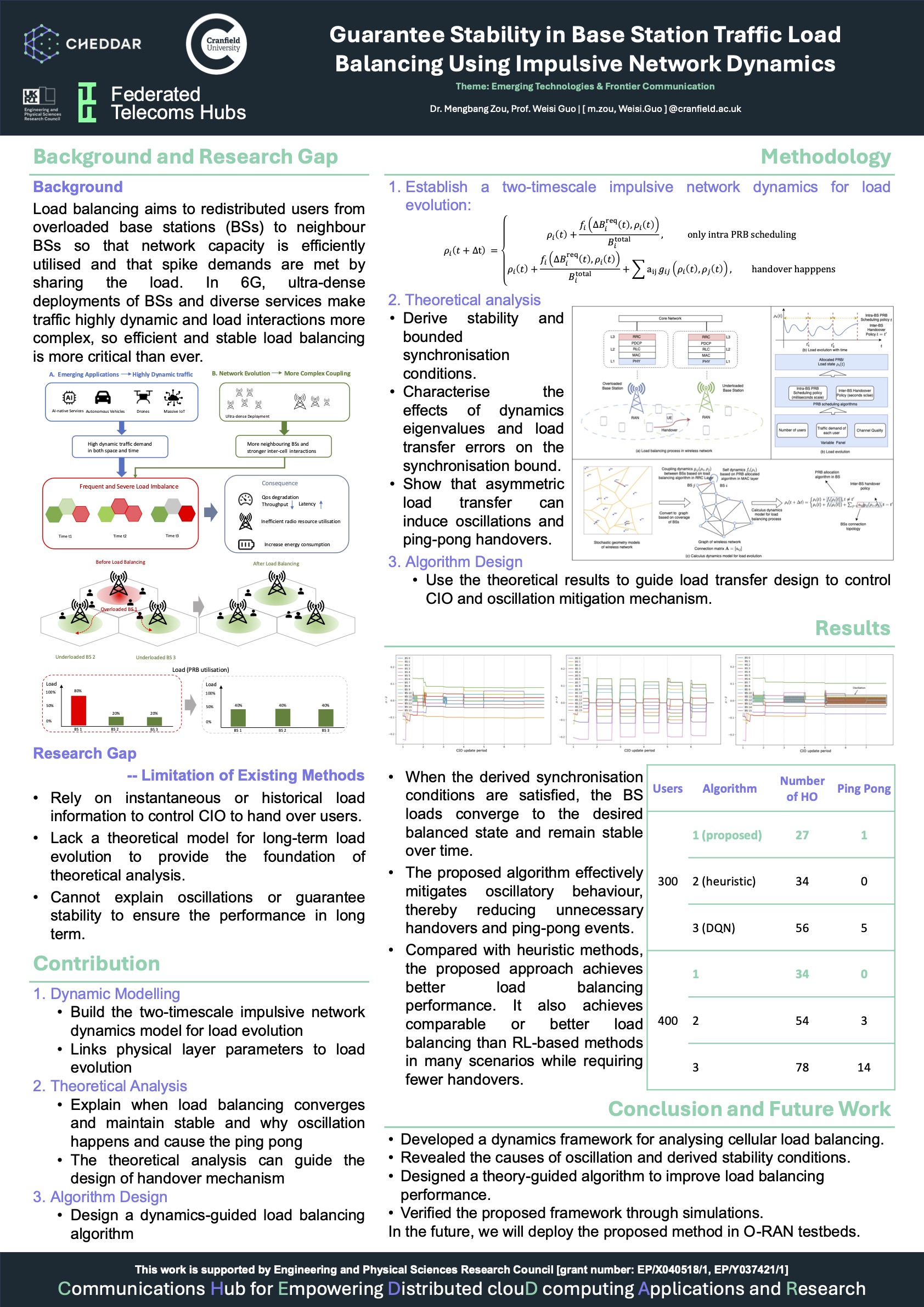
Guarantee Stability in Base Station Traffic Load Balancing Using Impulsive Network Dynamics
Dr Mengbang Zou and Professor Weisi Guo
Cranfield University
Load balancing redistributes traffic from overloaded base stations (BSs) to neighbouring underloaded BSs, improving network resource utilisation. However, it is becoming increasingly challenging in 6G due to highly dynamic traffic, dense deployments, and heterogeneous network architectures. Existing methods, including heuristic optimisation and reinforcement learning, optimise network control parameters through interaction with the environment, but lack an explicit model to describe how traffic load evolves over time. Consequently, they cannot explain oscillatory behaviour or provide theoretical guarantees on long-term stability. Instead of directly optimising control parameters, we model traffic load evolution as an impulsive network dynamics system that captures both intra-BS scheduling and inter-BS handover across multiple timescales. This framework enables rigorous analysis of stability and load evolution, guides the design of trustworthy load balancing algorithms, and provides a theoretical foundation for future AI-native wireless network management.
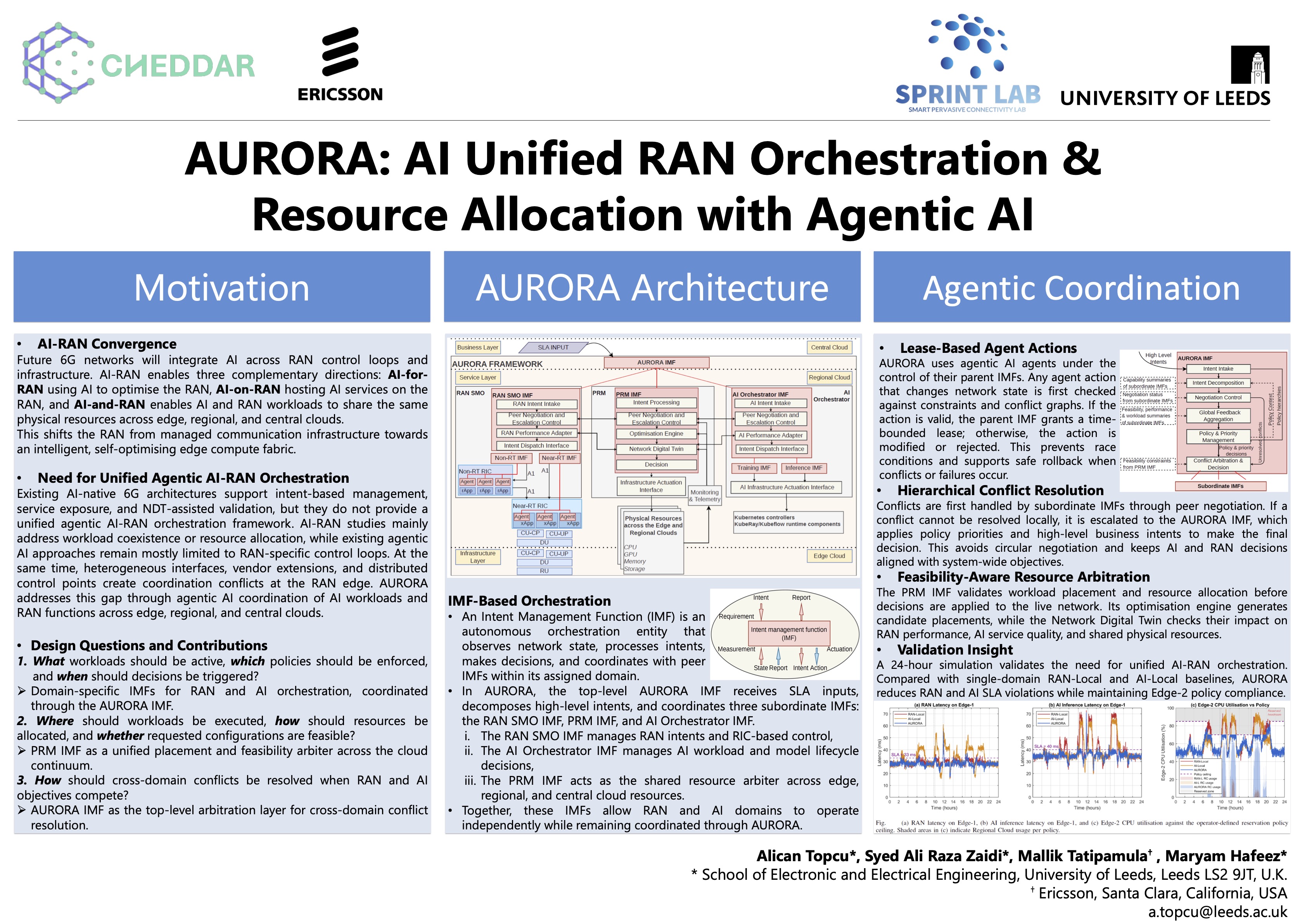
AURORA: AI Unified RAN Orchestration and Resource Allocation with Agentic AI
Alican Topcu, Syed Ali Raza Zaidi, Mallik Tatipamula and Maryam Hafeez
University of Leeds and Ericsson
This poster presents an agentic AI-based orchestration framework for future AI-RAN systems, where AI and RAN workloads are jointly managed across shared edge, regional, and central cloud tiers. The work addresses the need for unified orchestration, as isolated RAN or AI control cannot manage the coordination, resource contention, and conflict-resolution challenges created by shared AI-RAN infrastructure. AURORA addresses this through Intent Management Functions (IMFs), where the top-level AURORA IMF coordinates the RAN SMO IMF, PRM IMF, and AI Orchestrator IMF. These functions support intent decomposition, shared resource arbitration, hierarchical conflict resolution, and feasibility-aware decision-making. The potential impact is a scalable orchestration architecture for reliable, policy-compliant AI-RAN operation in future 6G networks.
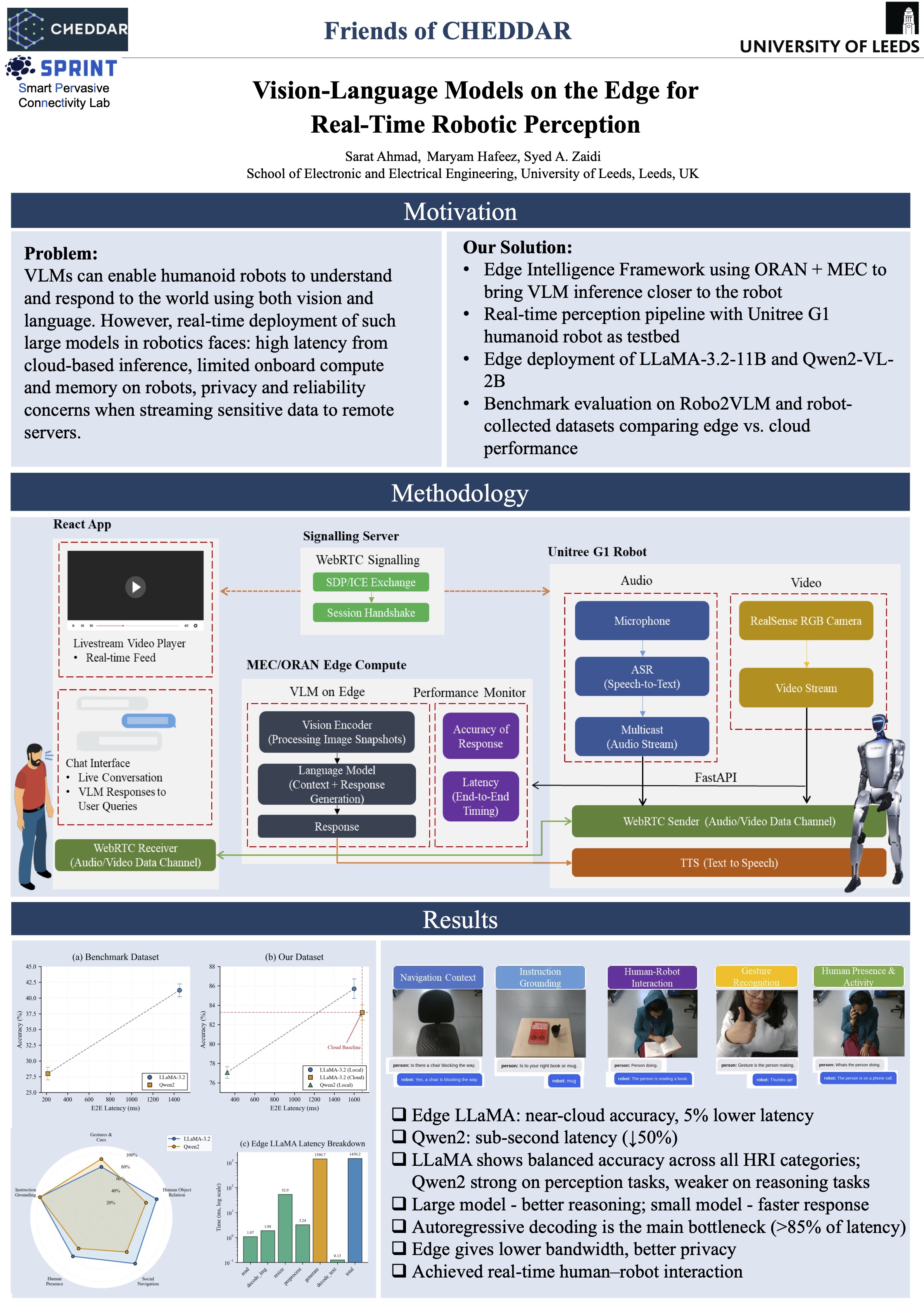
Vision-Language Models on the Edge for Real-Time Robotic Perception
Sarat Ahmad, Maryam Hafeez and Syed A. Zaidi
University of Leeds
This research investigates how vision-language models can be deployed closer to humanoid robots to support faster, more private and more reliable real-time interaction.
The framework combines Open RAN and mobile edge computing to process visual and language information near the robot rather than relying entirely on remote cloud infrastructure. Testing used a Unitree G1 humanoid robot alongside the LLaMA-3.2-11B and Qwen2-VL-2B models.
Edge-deployed LLaMA achieved accuracy close to cloud-based processing with 5% lower latency, while the smaller Qwen2 model delivered sub-second responses and reduced latency by approximately 50%.
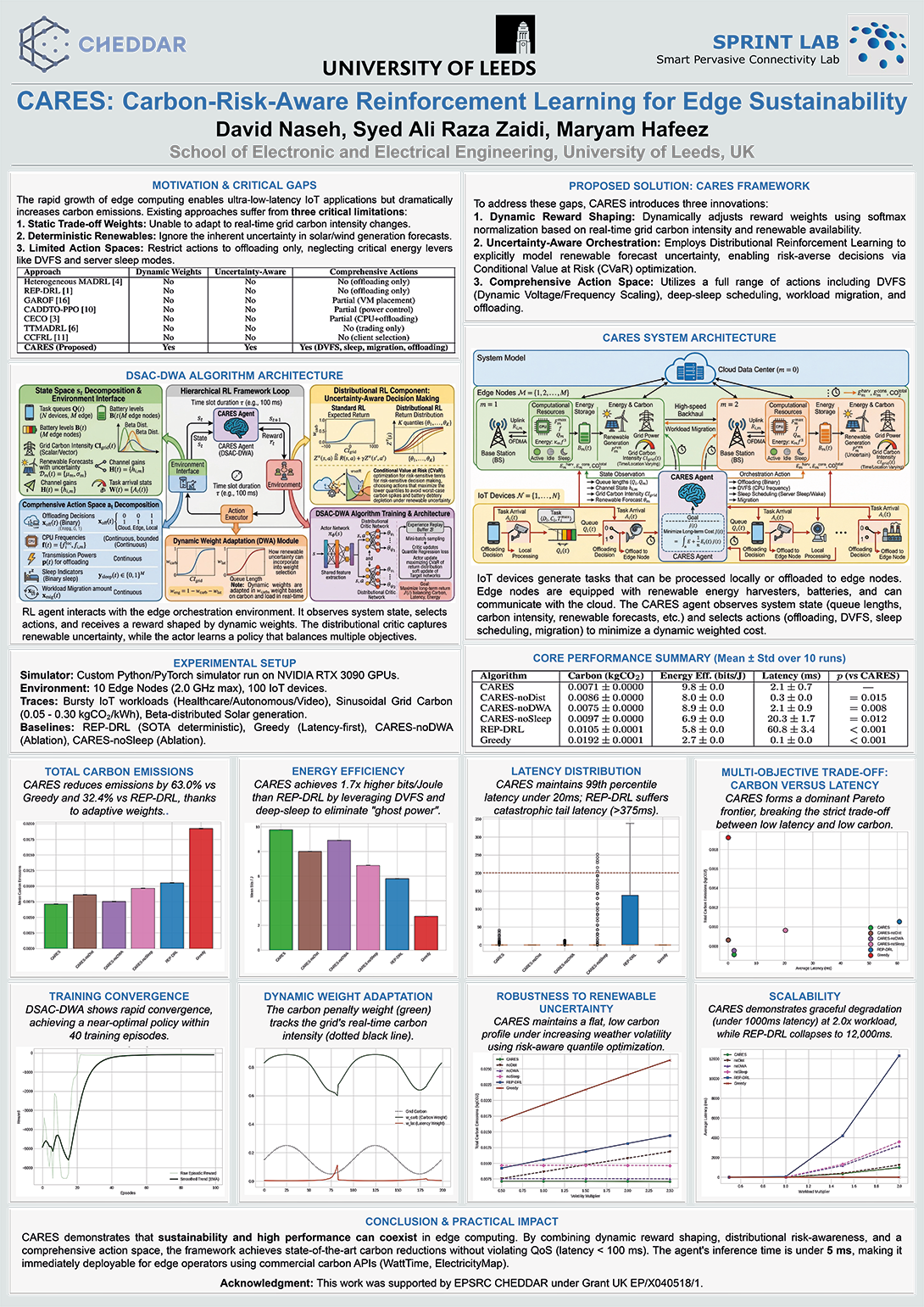
CARES: Carbon-Risk-Aware Reinforcement Learning for Edge Sustainability
David Naseh, Syed Ali Raza Zaidi and Maryam Hafeez
University of Leeds
CARES explores how edge-computing systems can reduce their carbon emissions while continuing to support applications that require fast and reliable processing.
The framework uses risk-aware reinforcement learning to respond to changing grid carbon intensity, uncertain renewable-energy forecasts and fluctuating workloads. It can select from a broad range of actions, including workload offloading, processor-frequency adjustment, server sleep scheduling and workload migration.
CARES reduced carbon emissions by 63% compared with a latency-first greedy method and by 32.4% compared with a deterministic reinforcement-learning baseline. It also achieved 1.7 times greater energy efficiency while keeping 99th-percentile latency below 20 milliseconds.
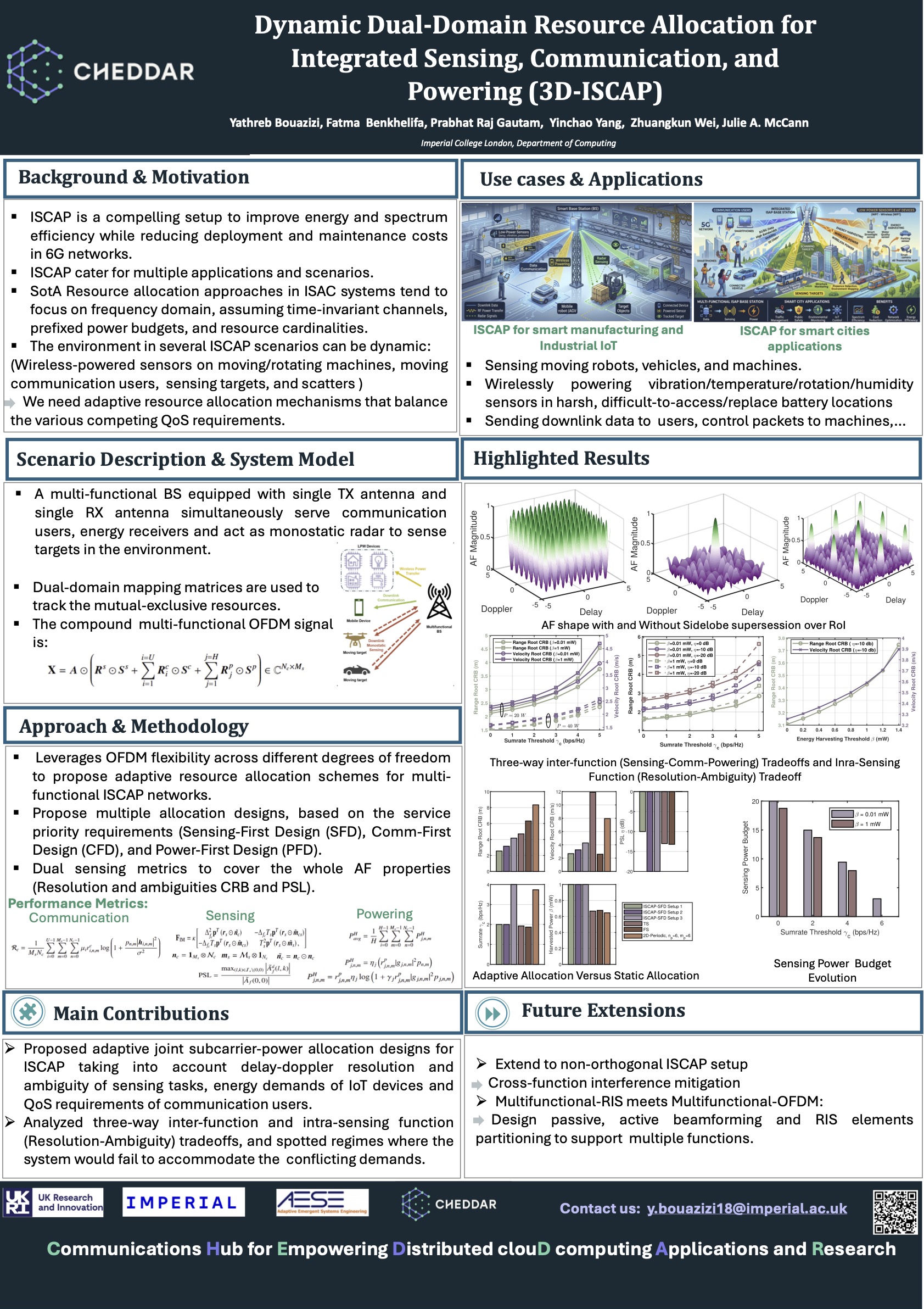
Yathreb Bouazizi, Fatma Benkhelifa, Prabhat Raj Gautam, Yinchao Yang, Zhuangkun Wei and Julie A. McCann
Imperial College London
The presented work is driven by practical use cases in smart cities, smart manufacturing, and Industrial IoT, which are characterised by their dynamic and heterogeneous operating environments encompassing moving users, robots, vehicles, and machines; moving/rotating vibration, temperature, rotation, and humidity sensors deployed in harsh or difficult-to-access environments where battery replacement could be impractical. To address the diverse requirements of these applications, we propose adaptive, multifunctional integrated sensing, communication, and wireless-powering designs that account for functions priorities, delay-doppler resolution and ambiguity of sensing tasks, energy demands of IoT devices, and QoS requirements of communication users. We analyse three-way inter-function trade-offs among sensing, communication, and wireless powering, as well as the intra-sensing-function trade-off between resolution and ambiguity, and we identify regimes in which the system would fail to accommodate the conflicting demands.
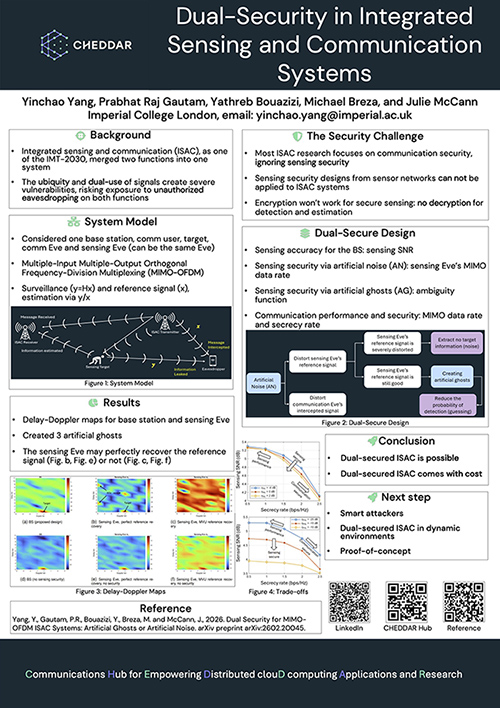
Dual-Security in Integrated Sensing and Communication Systems
Yinchao Yang, Prabhat Raj Gautam, Yathreb Bouazizi, Michael Breza and Julie McCann
Imperial College London
This poster presents research on dual security in Integrated Sensing and Communication (ISAC) systems, where the same wireless signals are used for both data communication and environmental sensing.
While most ISAC security research focuses on protecting communications, this work highlights the equally important challenge of securing the sensing function against sensing eavesdroppers.
The key message is that dual-secured ISAC is possible, although it introduces performance trade-offs. The proposed design uses artificial noise and artificial ghosts to protect sensing information while maintaining communication secrecy and overall system performance.
Results based on delay-Doppler maps demonstrate how artificial ghosts can mislead an eavesdropper and reduce the likelihood of successful target detection.
This research could support future 6G and IMT-2030 systems by making integrated wireless sensing and communication more secure, resilient and practical in dynamic environments.
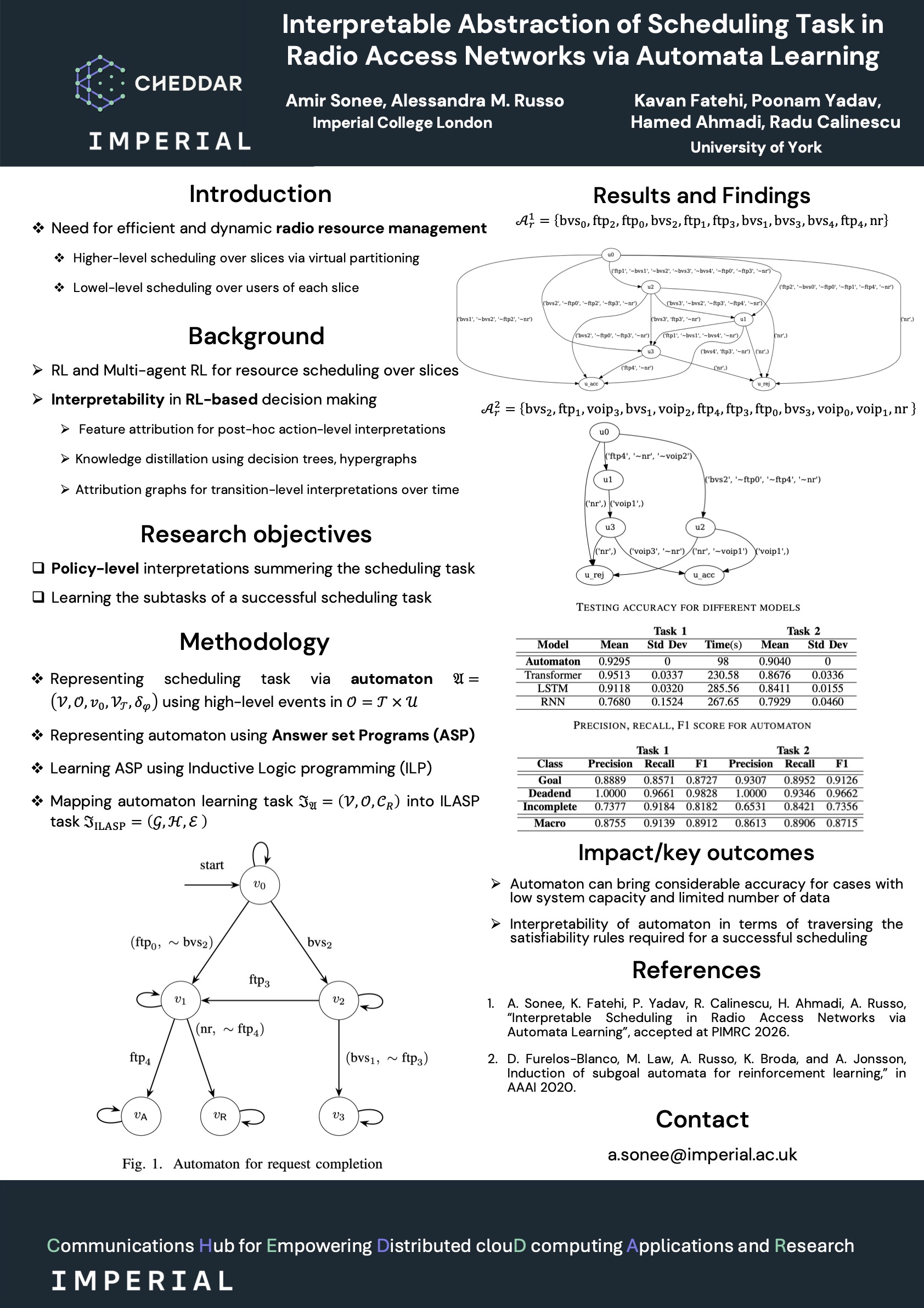
Interpretable Abstraction of Scheduling Task in Radio Access Networks via Automata Learning
Amir Sonee, Alessandra M. Russo, Kavan Fatehi, Poonam Yadav, Hamed Ahmadi, Radu Calinescu
Automaton approach is employed for an interpretable abstraction of the scheduling task in allocating physical resource blocks (PRBs) over the users in RAN. Inductive logic learning of Answer Set Programs (ASP) is used to learn the automaton states and transition rules of the edges for fulfilment of all service requests. In systems with low representational capacity, automaton-based model outperform or perform considerably close to the alternative sequential models but enabling interpretability for the task summarisation in fulfilling all service requests. This automaton can be further exploited in future studies to learn an RL-based scheduling policy that maximises the resource utility for successful completion of service requests.
Discover more from CHEDDAR
The poster exhibition reflects the breadth of research taking place across the CHEDDAR community and its partner institutions. Together, these projects are helping to develop future communications systems that are more sustainable, secure, intelligent, resilient and responsive to the needs of people and society.