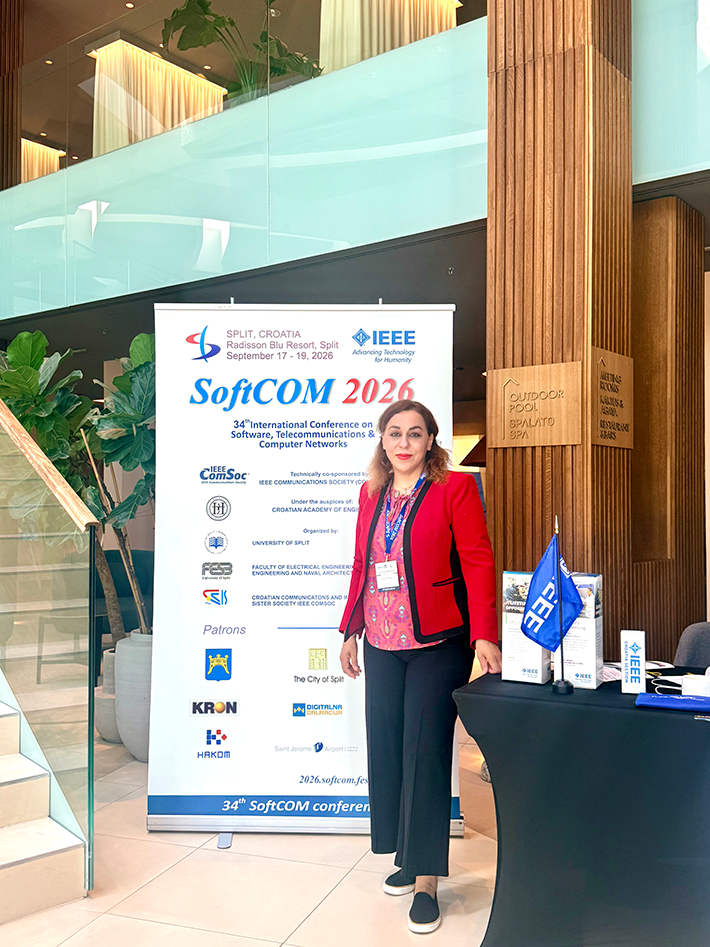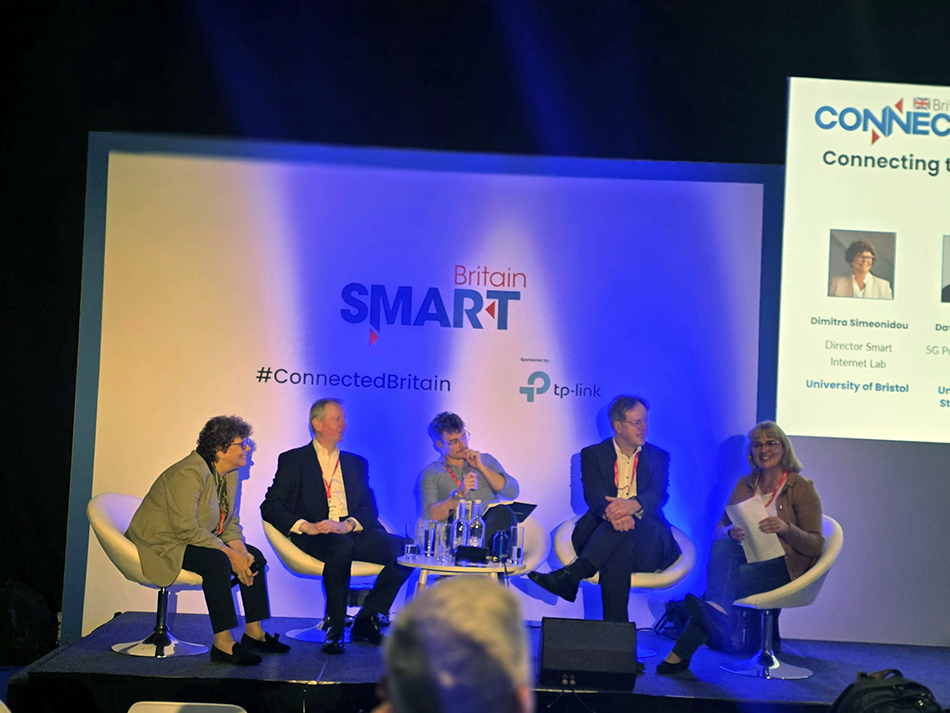
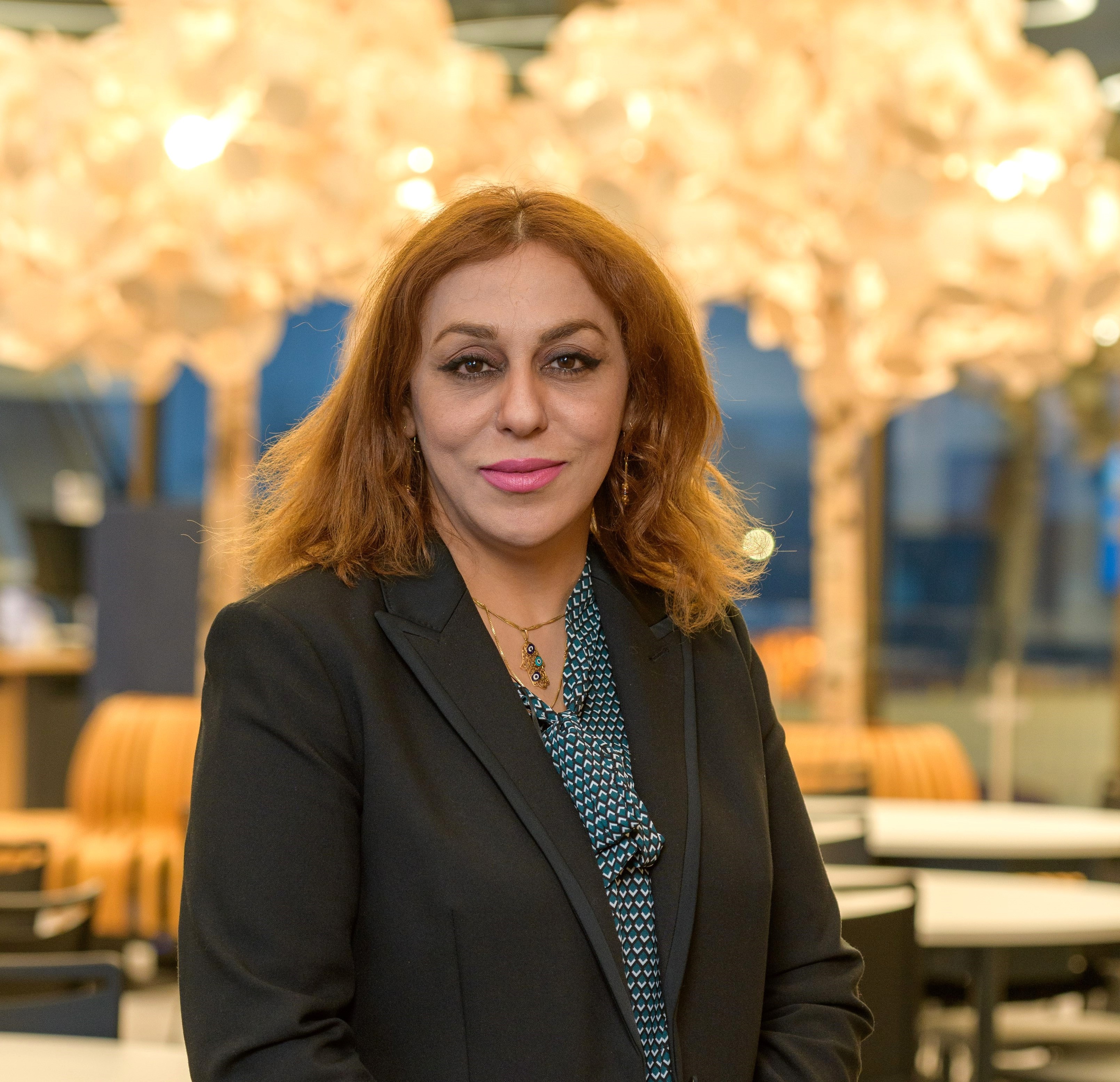
In the latest edition of our Women in Connectivity series, we speak with Professor Saba Al-Rubaye from Cranfield University, whose career spans advanced wireless communications, autonomous systems, future mobility and next-generation networking technologies.
With more than two decades of experience across both academia and industry, Professor Al-Rubaye has led pioneering research in areas including 6G communications, digital twins, O-RAN architectures, autonomous systems and aerospace connectivity. Her work has helped bridge the gap between cutting-edge telecommunications research and real-world applications, supporting innovation across sectors such as aviation, transport, energy and future mobility.
In this interview, Professor Al-Rubaye reflects on her career journey, discusses the transformative potential of 6G and AI-driven networks, shares insights from her work developing advanced communications systems, and offers advice to the next generation of women considering careers in engineering, telecommunications and technology.
Can you tell us about your career journey and what first inspired you to pursue research in telecommunications and connectivity?
Over the past two decades, I have worked on advanced wireless communications, autonomous systems, and networking, contributing to innovative solutions, technical developments, and strategic research roadmaps that aim to benefit both industry and society. During my early studies in electronics and communications engineering, I developed a strong interest in wireless communications and the challenge of enabling reliable connectivity in increasingly complex environments. I was particularly inspired by how emerging networking technologies can transform the world by improving global connectivity and creating new opportunities for cultural exchange, business development, and societal growth. I also had a strong hands-on passion for building basic electronic circuits, including simple radio transmission boards and receivers. This practical experience reinforced my curiosity and motivated me to develop larger-scale systems that could have a meaningful real-world impact.
You have experience across both academia and industry. How have these different environments shaped your approach to research and innovation?
Before joining Cranfield University in the UK, I worked with Quanta Services in Canada, where I led the integration of advanced wireless communication technologies with power systems to support smart grid development and the transition towards green and sustainable energy infrastructure. This work contributed to initiatives supported by both the Canadian and U.S. governments. My experience across both industry and academia has provided me with a well-rounded perspective on innovation and technology development. Industry taught me the importance of delivering practical, scalable, and commercially viable solutions that address real-world challenges, while academia has provided the opportunity to explore ambitious ideas and pursue long-term research advancements. Combining these experiences has shaped my approach to conducting research that is both scientifically rigorous and application-driven, with a strong focus on translating innovation into real-world impact and societal benefit.
Much of your research focuses on future communications technologies. What opportunities do you believe 6G will unlock for society and industry?
I believe 6G will touch every aspect of our daily life, where AI-driven networks proactively allocate resources and ensure the required quality of service for each application. This will make it significantly easier to enable new use cases such as augmented reality, intelligent supply chains, and drone-based package delivery. Within the CHEDDAR 6G Hub, my research team was able to develop key solutions for 6G architectures, including handover optimisation, traffic management, digital twins, and security within an O-RAN framework to support air mobility under the Non-Terrestrial Networks (NTN) paradigm. I do believe that my 6G research will be stand as a roadmap for ultra-reliable communications, high-mobility connectivity, and seamless integration of terrestrial and non-terrestrial networks, enabling transformative applications across transportation, space, and aviation sectors.
What has been the most rewarding achievement or project in your career so far, and why does it stand out?
One of the most rewarding aspects of my career has been establishing and managing a well-known research group in advanced communications systems at Cranfield University, together with advanced research facilities funded by industry partners, including Thales, Viasat, Honeywell and collaborative industrial projects that bridge emerging telecommunications technologies with real-world applications. These industrial collaborative activities successfully translated simulation environments into real-world operational testing and field trial demonstrations, effectively bridging the gap between modelling and practical deployment. What makes these achievements particularly rewarding is the opportunity to see research progress from early-stage concepts and laboratory validation through to practical solutions that deliver tangible impact for industry, academia, and society.
Correspondingly, in recognition of my sustained achievements and contributions to engineering research and innovation across academia and industry, I was honoured to be awarded the prestigious Life Senior Member of IEEE distinction. This recognition is reserved for accomplished professionals who have demonstrated significant performance and long-term contributions to the engineering profession, placing them among a distinguished group within IEEE’s global community of over 400,000 members worldwide.
As a woman working in engineering and telecommunications, have there been any challenges you have faced, and how did you overcome them?
As a woman in engineering, I have worked very hard to establish credibility and visibility in a field that remains highly male-dominated. I have addressed these challenges by consistently focusing on delivering high-quality research, building strong collaborations across academia and industry, and remaining confident in my technical expertise and leadership. Throughout my career, I have also been fortunate to work closely with supportive colleagues and mentors who have played an important role in my development. These experiences have strengthened my resilience and reinforced my commitment to promoting greater diversity and inclusion in engineering. I am particularly passionate about supporting and inspiring the next generation of engineers from underrepresented backgrounds to pursue and thrive in STEM careers.
The telecommunications sector is evolving rapidly with developments in AI, digital twins and autonomous systems. Which emerging technology do you think will have the greatest impact in the coming years?
While several emerging technologies will shape the future of telecommunications, I believe the convergence of Artificial Intelligence (AI) and Digital Twin technology will have the most significant impact. For example, through the CHEDDAR project, my research team have developed 6G Digital Twin platform for aerospace applications. This platform enables the modelling and simulation of complex network operational environments, allowing system performance to be evaluated and optimised before deployment. This combination of AI and Digital Twins will accelerate innovation cycles and reduce operational costs to enable more efficient management of critical infrastructure. Their impact will extend far beyond telecommunications, supporting advancements in aerospace, transportation, defence, and future autonomous systems.
What advice would you give to young women considering a career in telecommunications, engineering or technology?
I believe telecommunication engineering is becoming the foundation of our digital society. Success in the engineering field comes from continuous learning, building strong technical foundations, and actively seeking opportunities to work on real-world challenges. I also encourage young women to be confident in their ability to lead innovation and shape the future of advanced communications, and I hope to see more women helping to drive the innovations that will define our connected future.