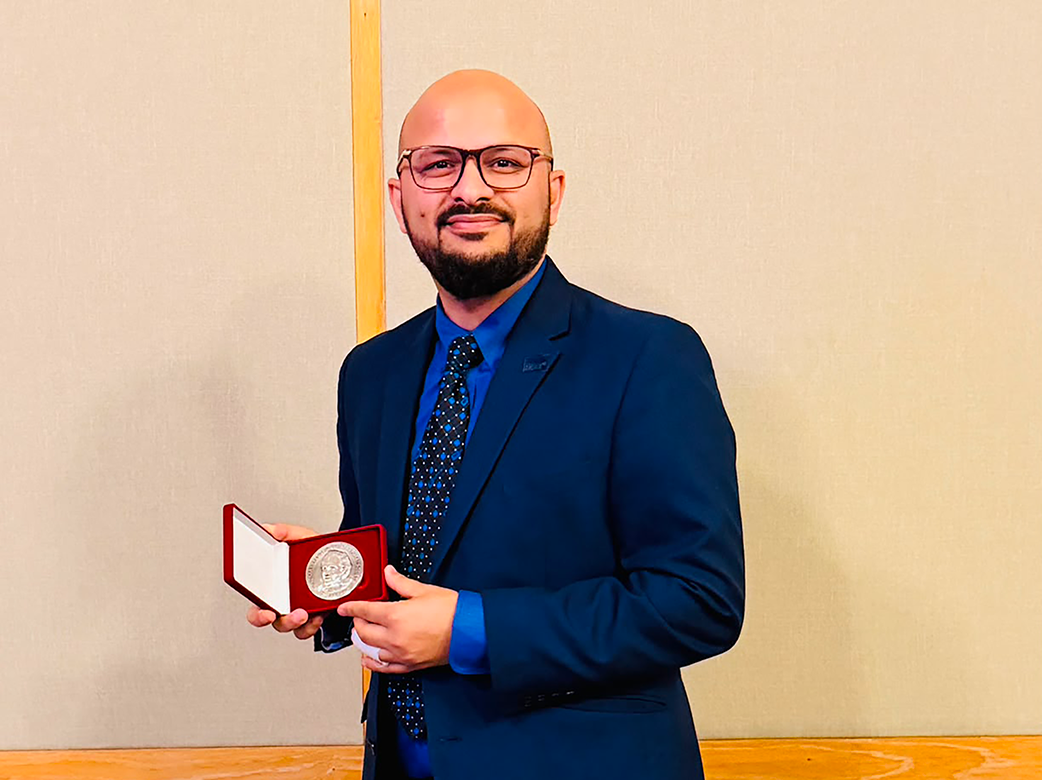
From AI-driven cities to intelligent homes: Professor Julie McCann at Connected Britain 2026
16 Sep, 2026
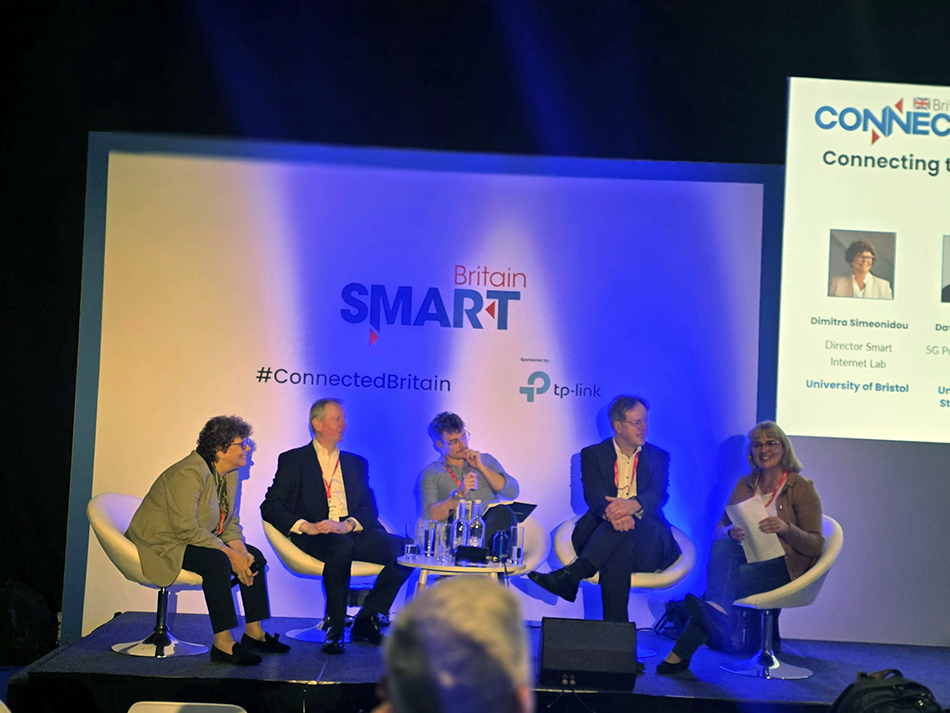
Professor Julie A. McCann, Director of the CHEDDAR Hub, joined two discussions at Connected Britain 2026 exploring how artificial intelligence, advanced connectivity and intelligent infrastructure could shape the places where we live and work.
Held at ExCeL London on 9–10 September, Connected Britain brought together leaders from across the connectivity ecosystem to discuss the technologies, partnerships and infrastructure needed to support the UK’s increasingly digital society.
Across two sessions, Professor McCann explored this transformation at two different scales: first, looking at the development of the AI-driven city, and then turning to the smart buildings and intelligent homes that form part of those connected urban environments.
Building the AI-driven city
On Wednesday 9 September, Professor McCann joined a discussion focused on the development of the AI-driven city and the role intelligent digital infrastructure could play in making urban environments more responsive, sustainable and connected.
The discussion highlighted an important shift in thinking about future cities. Connectivity is no longer simply about providing faster communications. Increasingly, networks will need to support systems capable of sensing what is happening around them, processing information in real time and responding intelligently.
For cities, this could mean infrastructure that can adapt dynamically to changes in demand, environmental conditions, transport patterns or the needs of citizens.
AI has an important role to play in enabling that responsiveness. By bringing together data from connected devices, communications networks and sensing technologies, future systems could make better decisions about how resources are used and how services are delivered.
However, creating an intelligent city also requires the underlying communications infrastructure to be dependable.
Advanced applications will increasingly depend on connectivity that is resilient, secure and capable of supporting large numbers of devices and services simultaneously. This means that the development of future cities cannot be separated from the development of future communications networks.
These are questions at the heart of research within the CHEDDAR Hub, where researchers are investigating the technologies needed for future distributed systems, including AI-enabled networks, sensing and communications, sustainability and resilient connectivity.
From smart cities to smart buildings
Professor McCann returned to the Connected Britain programme on Thursday 10 September for a discussion examining smart buildings and the intelligent home.
While the scale may be smaller, many of the technological challenges are closely connected to those facing the wider smart city.
Homes, workplaces and public buildings are becoming increasingly populated by connected sensors, devices and automated systems. In the future, these environments could become much more capable of understanding and responding to the people using them.
Rather than relying on individuals to constantly control devices manually, intelligent environments could use sensing and AI to respond automatically to changing circumstances.
Buildings could potentially adapt heating, lighting, ventilation or energy consumption according to occupancy and need. Connected technologies could also support areas such as health monitoring, independent living, safety and more efficient management of buildings.
The discussion also underlined that intelligence in the home should not simply mean adding more connected devices.
For these technologies to deliver genuine value, they need to work together securely, reliably and in ways that are useful to the people living or working within those spaces.
Putting people at the centre of intelligent infrastructure
A common theme running across both Connected Britain discussions was the importance of looking beyond the technology itself.
Whether developing an AI-driven city or an intelligent home, the purpose of digital infrastructure is ultimately to support people.
Future communications systems therefore need to be designed around real-world needs, considering not only performance but also sustainability, security, resilience and trust.
This human-centred approach is one of the central themes of CHEDDAR’s research into future communications.
As networks become increasingly integrated with transport, healthcare, buildings, energy systems and everyday devices, the distinction between digital infrastructure and the physical world will continue to narrow.
The challenge now is to ensure that this increasingly intelligent infrastructure is developed in a way that delivers meaningful benefits for society.
Professor McCann’s contributions at Connected Britain demonstrated how research into future communications is already moving beyond the question of simply making networks faster.
The next generation of connectivity will increasingly be about creating networks that can sense, understand, adapt and respond from the scale of an individual home to the scale of an entire city.