Cheddar York Team at Fedetated Telecom Hub (FTH) Project Showcase
16 Dec, 2025
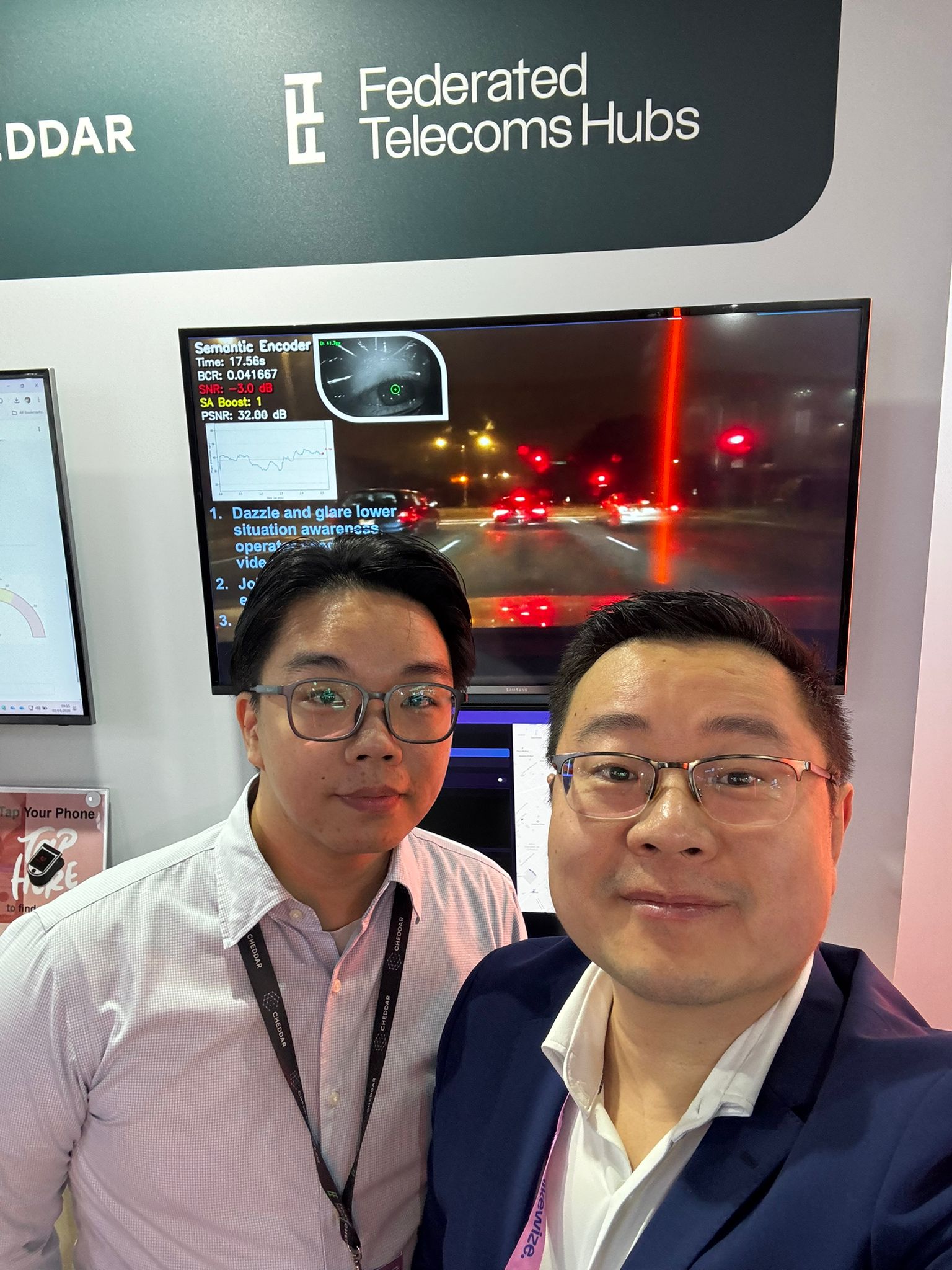
University of York Team Demontrated two projects at FTH Showcase at Science Museum London and got signifiant interest from different industry and academic visitors.
The first work, titled: xApp Driven RAN Optimisation for Mission Critical Robots in a Multi UE Environment, demonstrates a practical approach to achieving deterministic wireless performance for mission-critical robotic systems in industrial and healthcare environments. Traditional network slicing cannot guarantee per-UE behaviour because PRB allocation remains under the control of the gNB’s generic scheduler. To address this limitation, the team developed a custom PRB-allocation xApp on the Near-RT RIC, enabling fine-grained, real-time control of radio resources for critical devices. Using an srsRAN gNB, Open5GS core, and OSC Near-RT RIC, the xApp dynamically prioritised a robotic UE over a non-critical UE, resulting in higher throughput, smoother motion, and reduced jitter. These results show that RIC-driven RAN optimisation can deliver predictable, stable wireless links for safety-critical robots, paving the way toward fully deterministic 5G/6G operation in multi-robot and time-sensitive deployments.

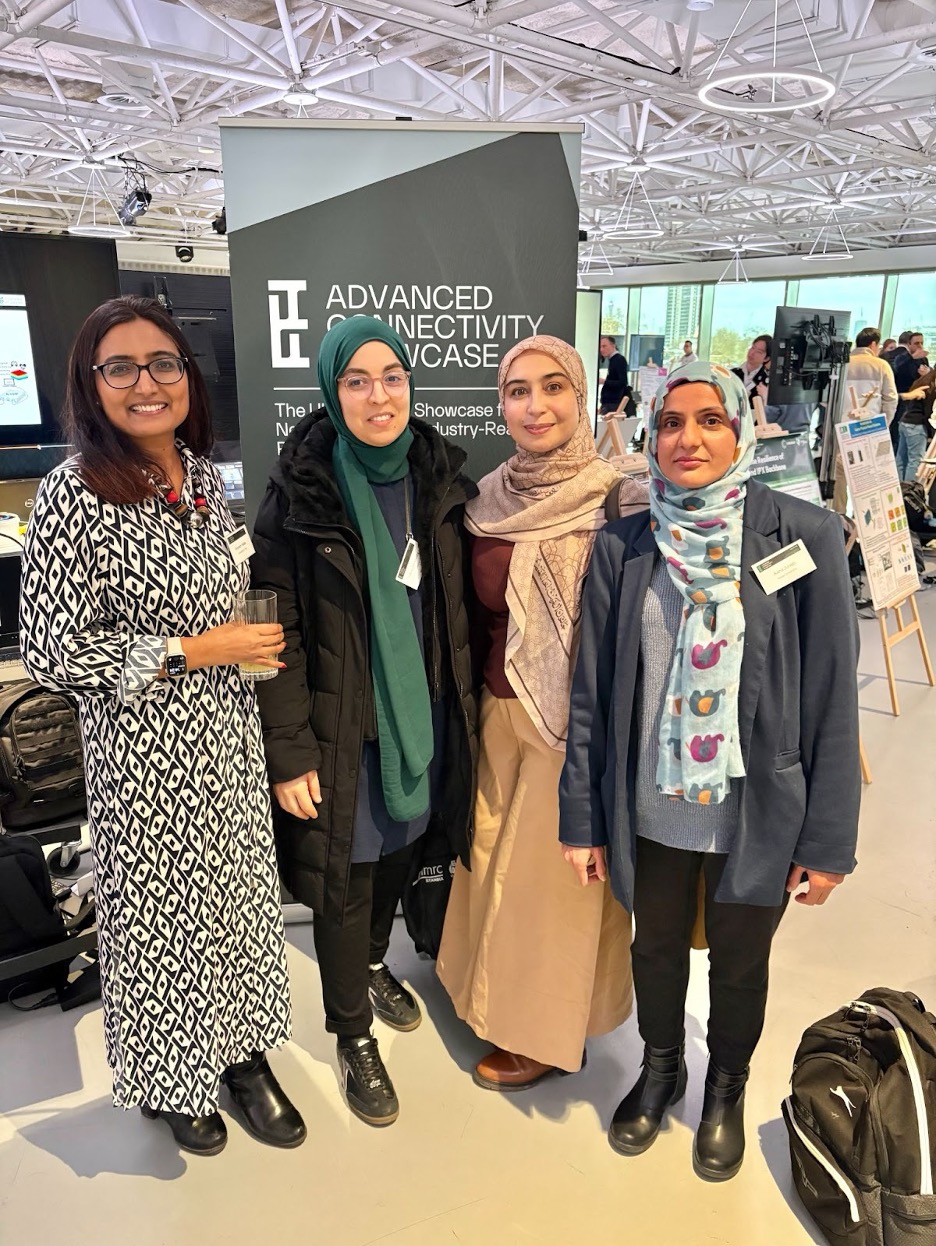
With Cheddar Lead – Prof Julie McCann (Imperial) and Cheddar Colleague – Dr Aisha Junejo (Keele U)
The second work, titled: Testing the Resilience of the IP and IPX Backbone
This project examines the resilience of UK Internet and IPX connectivity by mapping real-world inter-network relationships and replicating them at scale. Using iNetVisor, a tool that collects routing data and constructs detailed network graphs, the team uncovered a heavy national reliance on a small number of international providers and peering points, particularly in London and Slough. The analysis also revealed that 22% of UK IP networks unknowingly peer with providers that have a strong presence in Russia, highlighting geopolitical risks to network sovereignty. To analyse failure scenarios—such as the loss of major hubs like Telehouse London—the researchers built TERIS, a Kubernetes-based emulation platform that reproduces domestic and international topologies, enabling systematic testing of how backbone disruptions affect overall Internet resilience