Agentic AI Assistants for Future AI-RAN Networks Demonstrated at MWC Barcelona 2026
5 Mar, 2026
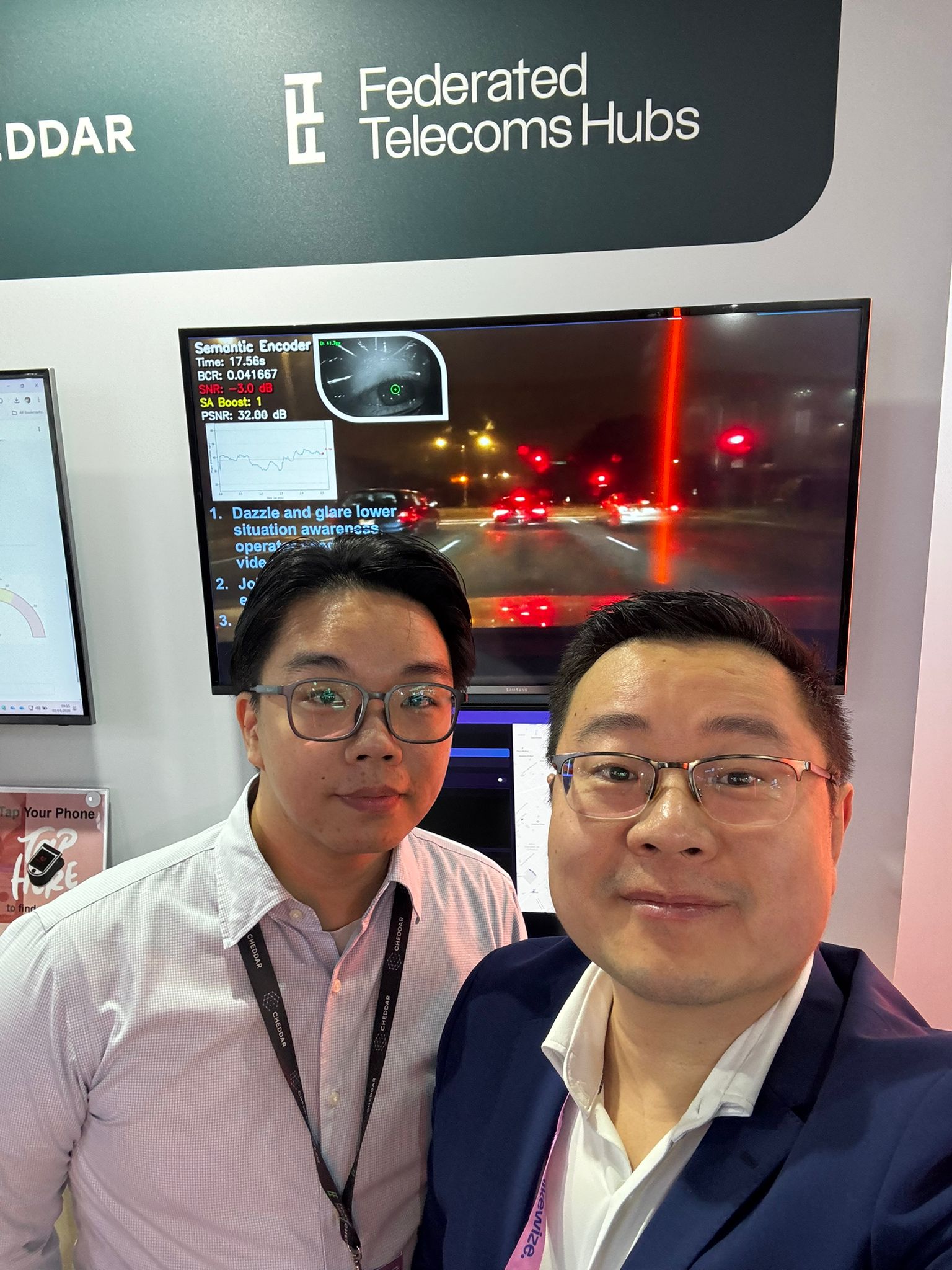
Researchers from the CHEDDAR Hub are showcasing a new demonstration at Mobile World Congress Barcelona 2026 that explores how agentic AI assistants could transform the way next-generation wireless networks are designed, deployed and managed.
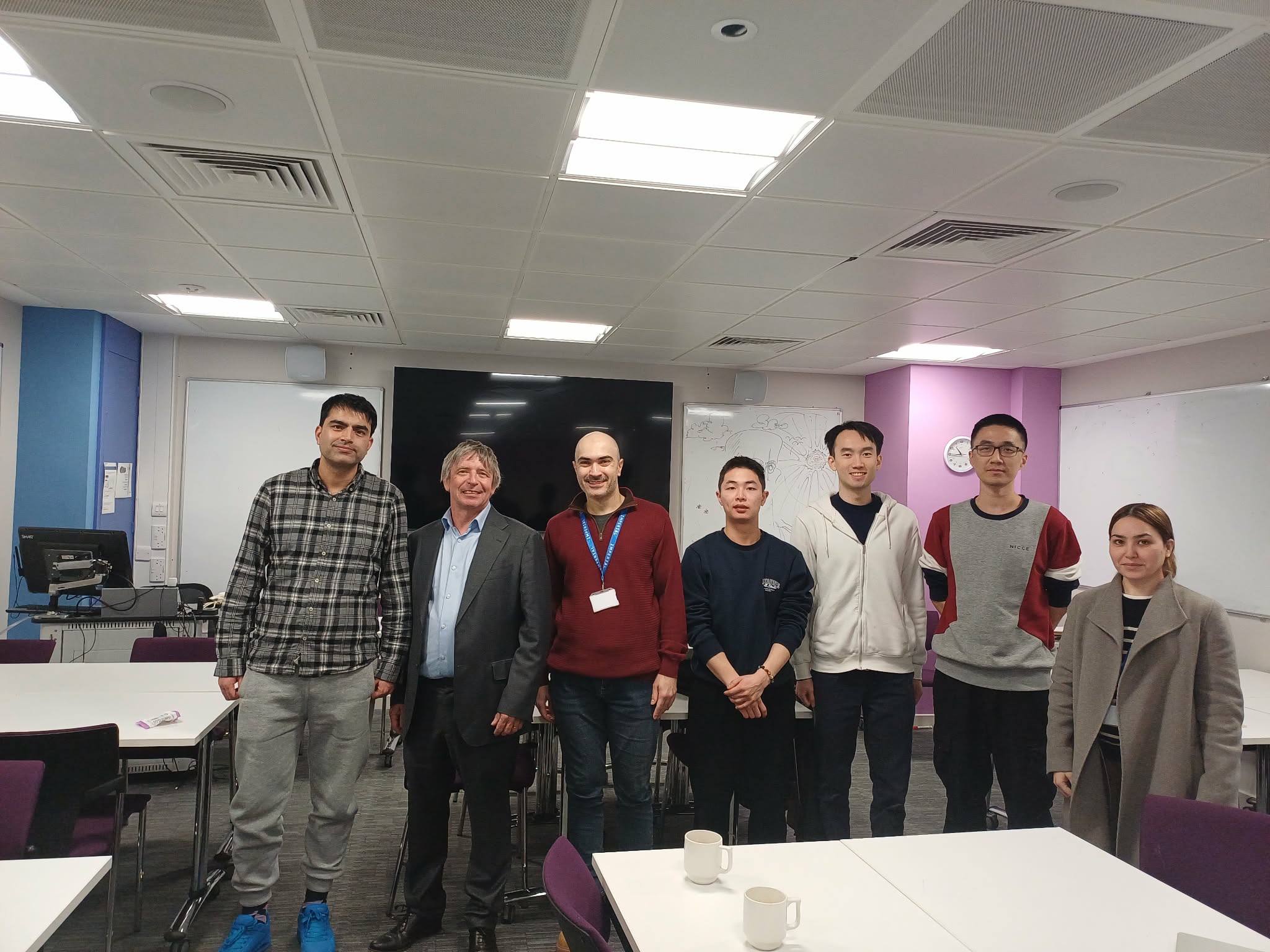
The demonstration, developed by researchers at Cranfield University, including Dr Jinsheng Yuan and Professor Weisi Guo, introduces an Agentic Assistant for AI-RAN Design, Implementation, Management and Customer Service.
The system demonstrates how intelligent AI assistants could support telecom engineers and enterprise users in designing AI-native radio networks, evaluating technical and commercial decisions, and managing network operations through interactive dialogue.
Research Foundations Behind the Demonstration
Overview & Why This Is Important Now
A key vision for future generation networks is to grow the customer base and business services from enterprise and private users. This is approached from three perspectives:
- Hosting of AI services to not only benefit networks (AI-for-RAN) but also benefit new customers (RAN-for-AI)
- Opening the RAN to customisation (Open RAN / O-RAN)
- Creating customer intent-based self-programmability to fully utilise these capabilities
However, the cost base and agility to take advantage of these capabilities risk being hampered by increased technical complexity. Implementation costs (IMPEX), operational costs (OPEX), and cognitive challenges may discourage customers from adopting these technologies or lead them to over-invest in infrastructure to reduce uncertainty (CAPEX).
A recent survey of more than 450 enterprise RAN users highlighted these barriers as significant hindrances to digital transformation.
Imagine a scenario where a customer with very little expertise can have a dialogue with an agentic AI assistant that understands the technical, business and social aspects of their requirements. The assistant could design and plan AI-RAN architectures while ensuring standards compliance and alignment with best practices.
If implemented effectively, such assistants could dramatically reduce costs across IMPEX, CAPEX and OPEX while increasing the uptake of AI-RAN services among new enterprise customers.
The work presented at MWC builds on research conducted at Cranfield University by Dr Yun Tang and Professor Weisi Guo, exploring how such AI assistants can be designed.
The Challenge – Why It Matters
At first glance, building an AI assistant might seem straightforward in an era where foundation models can generate complex content and interactive environments.
However, large language models (LLMs) remain prone to hallucinations and often provide limited interpretability in their reasoning. This presents a significant challenge in telecom environments where trust, transparency and technical reliability are essential.
The CHEDDAR research programme addresses these issues through several initiatives:
- Telecom knowledge graphs and proprietary experimental datasets to improve LLM performance (work at the University of Leeds and University of Glasgow)
- Agentic debate frameworks that simulate round-table discussions and incorporate multi-stakeholder perspectives when evaluating solutions
These approaches aim to improve both the consistency and trustworthiness of AI-driven decision-making.
For enterprises seeking to adopt AI-RAN technologies, solutions must satisfy three conditions:
- Desirable for the business model
- Feasible from a technical perspective
- Viable in terms of cost, integration and deployment timelines
Achieving this balance is particularly challenging given the complexity and scale of future 6G AI-RAN ecosystems.
The Solution
The research introduces a three-layer intelligence architecture designed to support robust and trustworthy AI assistants.
- Knowledge Layer
The knowledge layer functions as a knowledge distillation ecosystem that ingests information from:
- telecom standards
- industrial reports
- academic research papers
The system then:
- intelligently tags and classifies knowledge
- shares knowledge across different AI-RAN applications to avoid duplication
- scores knowledge extraction vectors based on user feedback
- Intelligence Layer
The intelligence layer coordinates automated agentic reasoning processes capable of:
- translating customer intent into AI-RAN architecture designs
- debating sociotechnical and commercial risks to refine those designs
- operationalising AI-RAN capabilities such as radio resource management (AI-for-RAN) or automated machine learning pipelines (RAN-for-AI)
- Interface Layer
The interface layer provides an agentic AI assistant interface that interacts with users through turn-based dialogue.
Rather than responding to single prompts, the system supports iterative conversations, recognising that complex engineering challenges often require discussion and refinement.
This enables telecom engineers and enterprise users to collaboratively explore network design and operational strategies with the AI assistant.
Impact / Outcomes
The resulting ecosystem can generate technically sound solutions for a wide range of enterprise use cases.
- The Knowledge Layer ensures solutions draw from existing research, standards and case studies.
- The Intelligence Layer evaluates feasibility and commercial implications.
- The Interface Layer enables rapid interaction between users and the AI system.
Early experiments suggest this approach can deliver solutions approximately 500× faster and cheaper than traditional consultancy approaches, while reducing human bias in network design.
An operational version of the system could also support ongoing AI-RAN network management, helping enterprise users reduce operational costs after deployment.